
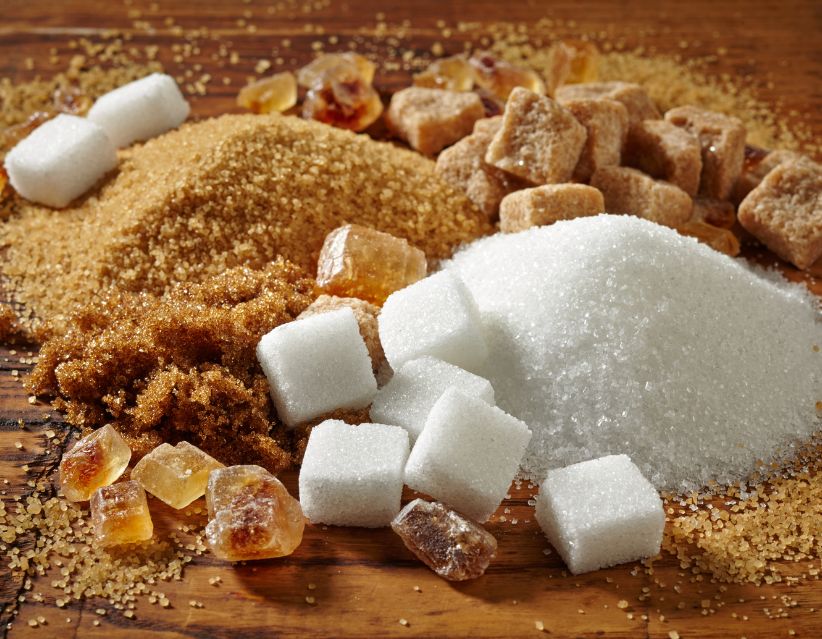
I never thought much about sugar types until my grandfather was diagnosed with type 2 diabetes three years ago. My grandmother, being the problem-solver she is, started keeping a detailed notebook about everything related to managing his blood sugar. She'd spend hours comparing different sweeteners, reading labels at the local kirana store, and testing recipes. One question kept coming up: is brown sugar really better than white sugar?
Let me share what she discovered through her research, combined with what I've learned while helping her experiment in our kitchen.
What You'll Learn in This Guide
- The real nutritional difference between brown and white sugar (spoiler: it's tiny)
- Which one affects blood glucose faster
- How to choose the right sugar for your cooking needs
- Better alternatives like jaggery for Indian households
- Practical tips for baking and making traditional sweets
Quick answer: Brown sugar is white sugar with molasses added, giving it a moister texture and trace minerals. Nutritionally they're similar; both raise blood sugar quickly, so choose by taste and recipe instead of for health benefit.
Understanding Brown Sugar: What Makes It Brown?
Brown sugar isn't some magical, healthier version of sweetener that grows separately. It's actually refined white sugar with molasses syrup mixed back in. That's it.
There are two main types you'll find in Indian stores:
Light brown sugar contains about 3-4% molasses. It has a subtle caramel taste and works well in cookies and cakes.
Dark brown sugar has around 6-8% molasses, giving it a stronger flavor and deeper color. My granny uses this for making rich chutneys and certain baked goods.
The molasses content gives brown sugar its characteristic sticky, moist texture. This moisture is why brown sugar tends to clump and harden if you don't store it properly. The molasses also brings tiny amounts of minerals like calcium, iron, and potassium, but honestly, the amounts are so small they barely matter for your daily nutrition needs.
When my grandmother first started buying brown sugar, she thought she was making a much healthier choice for my grandfather. The shopkeeper had convinced her it was "natural" and "better for diabetes." We later learned this wasn't quite accurate.
What About White Sugar? How Is It Made?
White sugar goes through a refining process that removes all the molasses from sugarcane or sugar beet juice. What's left is pure sucrose, those white crystals we all know.
In India, most white sugar comes from sugarcane. The process involves crushing cane, extracting juice, boiling it down, and then spinning it in a centrifuge to separate sugar crystals from molasses. The crystals are then washed and dried.
The final product is 99.9% pure sucrose. No moisture, no minerals, just sweet carbohydrate that dissolves cleanly in your chai or desserts.
My granny's notes mention that she initially avoided white sugar completely, thinking it was "processed" and therefore bad. But here's the thing: brown sugar is just as processed. It's white sugar with molasses added back, often in controlled factory conditions.
The Real Differences: Molasses, Moisture, and Flavor
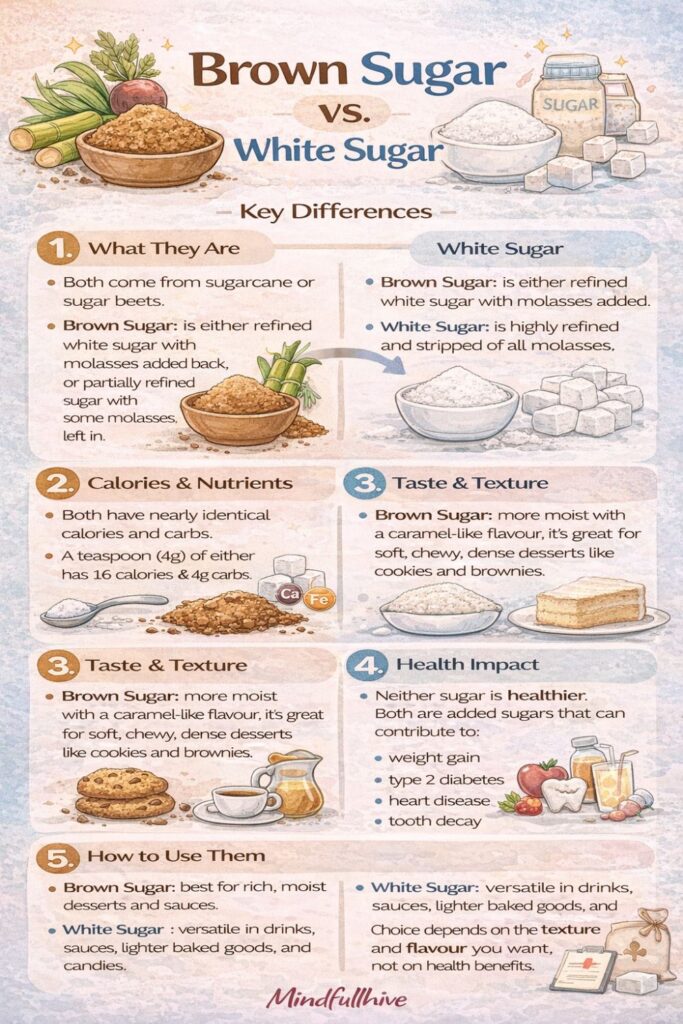
Let me break down what actually changes between these two:
- Molasses content is the main difference. Brown sugar contains 3-8% molasses depending on whether it's light or dark. White sugar has zero molasses.
- Moisture level varies significantly. Brown sugar holds more water because of the molasses, making it softer and stickier. White sugar is completely dry and flows freely.
- Flavor profile differs too. Brown sugar has a warm, caramel-like taste with slight hints of toffee. White sugar is just straightforward sweet with no additional flavor notes.
- Baking behavior changes based on moisture. When making cookies, brown sugar creates chewier, denser results. White sugar makes them crispier. For Indian sweets like barfi or ladoo, this moisture difference can affect the final texture quite a bit.
My grandmother tested both sugars in her kheer recipe. The brown sugar version had a deeper color and subtle molasses flavor that some family members loved, while others preferred the clean sweetness of white sugar. Neither version was "healthier" though.
Nutrition Comparison: The Truth About Calories and Minerals
Here's where things get interesting. Let me show you the actual nutrition facts:
Per teaspoon (4 grams):
Brown sugar provides about 15 calories, 4g carbohydrates, 4g sugars, and trace amounts of calcium (1mg), iron (0.01mg), and potassium (4mg).
White sugar provides about 16 calories, 4g carbohydrates, 4g sugars, and essentially no minerals.
Per 100 grams:
Brown sugar gives you roughly 380 calories, 98g carbohydrates, minimal calcium (83mg), iron (0.7mg), and potassium (133mg).
White sugar provides about 387 calories, 100g carbohydrates, and negligible mineral content.
Notice something? The differences are incredibly small. Those minerals in brown sugar sound good on paper, but you'd need to eat unrealistic amounts to get any real nutritional benefit. To get your daily iron needs from brown sugar, you'd have to consume over a kilogram. That's obviously not happening.
Both types are essentially pure sucrose, a simple carbohydrate that your body breaks down into glucose and fructose. Your body processes them almost identically.
When my granny showed these numbers to our family doctor, he smiled and said what we needed to hear: neither sugar is a health food. Both should be limited, especially for someone managing diabetes.
Glycemic Index, Diabetes, and Blood Sugar Impact
This was the most important part of my grandmother's research. My grandfather needed to understand how different sweeteners affected his blood glucose.
The glycemic index (GI) measures how quickly foods raise blood sugar. Pure glucose has a GI of 100 as the reference point.
White sugar has a glycemic index around 65. Brown sugar sits at roughly 64. Practically identical.
Both sugars are rapidly absorbed, causing quick spikes in blood glucose levels. Neither is suitable as a "diabetic-friendly" option. The tiny difference in GI doesn't translate to any meaningful benefit for diabetes management.
My granny tested this herself using my grandfather's glucometer (with his doctor's knowledge, of course). She had him check blood sugar before and after consuming equal amounts of brown versus white sugar on different days. The results? Both caused similar blood sugar spikes within 30-45 minutes.
For anyone managing diabetes, the key isn't choosing brown over white. It's limiting all added sugars and focusing on complex carbohydrates, fiber, and protein instead.
Our doctor recommended using very small amounts of any sugar if needed for taste, but relying on natural fruit sweetness, spices like cinnamon, and occasionally jaggery in tiny quantities instead.
Cooking and Baking: When to Use Which Sugar
Now this is where the choice between brown sugar and white sugar actually matters.
For baking:
Cookies made with brown sugar turn out chewier and moister because of the molasses. The moisture prevents them from drying out. White sugar creates crispier, lighter cookies.
Cakes benefit from whichever flavor profile you want. Brown adds depth and works beautifully in spice cakes or chocolate preparations. White keeps cakes light and lets other flavors shine.
For Indian sweets:
My granny discovered that substituting white with brown in traditional recipes needs some adjustment. Brown sugar's moisture affects the texture of halwa, barfi, and ladoo.
For halwa, she reduces liquid slightly when using brown sugar since it adds extra moisture. Otherwise, the halwa becomes too soft.
For ladoo, brown sugar can make the mixture stickier, which sometimes helps with binding but other times makes it harder to shape.
For beverages like chai or coffee, it's purely personal preference. Brown sugar adds a molasses note that some people love, while others find it overpowering.
Hygroscopic behavior (ability to absorb moisture) is higher in brown sugar. This means it can make baked goods stay moist longer, but it also means the sugar itself hardens faster if not stored properly.
The Indian Context: Jaggery, Khand, and Traditional Sweeteners
This section became crucial in my grandmother's notebook. She wanted to know how jaggery (gur) compared to both brown and white sugar.
Jaggery is unrefined sugar made by boiling sugarcane juice until it solidifies. Unlike refined sugars, jaggery retains more minerals, including iron, magnesium, potassium, and some B vitamins. It also contains antioxidants and compounds that may support digestion.
Desi khand is another traditional option. It's partially refined, sitting somewhere between jaggery and white sugar in terms of processing.
The important truth my granny learned: jaggery is still sugar. It raises blood glucose, contains similar calories to white and brown sugar, and should be consumed in moderation, especially for diabetics.
That said, when she makes traditional preparations like til ke ladoo or peanut chikki, she prefers jaggery for its authentic taste and slightly better nutrient profile. For everyday chai, she's reduced all sweeteners significantly.
Regional names you might encounter: gur, bellam, vellam, sharkara. These are all forms of jaggery or traditional natural sweeteners common across India.
Buying Guide: Labels, Brands, and Where to Shop
My grandmother got fooled initially by marketing. Some brands sell artificially colored white sugar as "brown sugar" at premium prices. Here's how to spot real brown sugar:
- Read the ingredients: It should list sugar and molasses. If it just says "sugar" with added color, skip it.
- Check the texture: Real brown sugar feels moist and clumps slightly. Artificially colored sugar flows freely like white sugar.
- Popular brands in India: Madhur, Uttam Sugar, Dhampur Green are generally reliable. For jaggery, local organic brands from your region often offer better quality than mass-market options.
- Price points: Brown sugar typically costs 10-20% more than white sugar. A 1kg pack ranges from ₹60-80 depending on the brand and your location.
- Where to buy: Most kirana stores stock basic brown sugar now. For better variety, check supermarkets like More, Reliance Fresh, or Big Bazaar. Online options include Amazon, BigBasket, and Flipkart, often with competitive pricing.
My granny now buys a small quantity of brown sugar for specific recipes and keeps jaggery blocks for traditional sweets. She's also reduced overall sugar consumption in our household by at least 40% through this whole research process.
How to Substitute Brown Sugar for White (and Vice Versa)
This comes up a lot in my grandmother's cooking experiments. Here are her tested substitution ratios:
- Brown to white: Replace 1 cup brown sugar with 1 cup white sugar. For recipes where moisture matters (like cookies), add 1-2 tablespoons of molasses or reduce other liquids slightly.
- White to brown: Use 1 cup white sugar plus 1-2 tablespoons molasses for light brown, or 3-4 tablespoons for dark brown. Mix well until molasses is evenly distributed.
For Indian desserts:
When making gajar halwa, she uses equal amounts but reduces milk by 2-3 tablespoons if switching from white to brown sugar.
For coconut barfi, white to brown substitution works perfectly without any other changes.
For besan ladoo, brown sugar makes the mixture softer, so she slightly increases besan to maintain the right consistency.
Storage tips: Keep brown sugar in an airtight container with a slice of bread or apple to prevent hardening. White sugar stores easily in any covered container away from moisture.
What I Actually Recommend After Three Years
After watching my granny fill an entire notebook with observations, testing countless recipes, and monitoring my grandfather's health, here's the practical conclusion:
Neither brown sugar nor white sugar is significantly healthier. The nutrition difference is negligible. Both are added sugars that should be limited in any healthy diet, especially for anyone with diabetes or metabolic concerns.
Choose brown sugar when you want its distinctive caramel flavor and moist texture in baking. Use white sugar when you prefer clean sweetness and crispy results.
For traditional Indian cooking, consider jaggery when its robust flavor complements the dish, but don't fool yourself into thinking it's a health food.
Most importantly, reduce overall sugar consumption. My grandmother's biggest success wasn't finding a "healthier" sugar. It was cutting our family's total sugar intake by exploring spices, using ripe fruits for sweetness, and retraining our taste buds to enjoy less sweet foods.
My grandfather's blood sugar levels improved not because we switched to brown sugar, but because we simply used less of everything sweet.
Frequently Asked Questions
Is brown sugar healthier than white sugar?
No. Brown sugar contains tiny amounts of minerals from molasses, but nutritionally both are similar. Both should be consumed sparingly as added sugars.
Which raises blood sugar more quickly?
Both increase blood glucose at nearly identical rates. Neither is suitable for diabetes management as a "better" option. The glycemic index difference is negligible.
Can I substitute brown sugar for white in Indian sweets?
Yes, but adjust for moisture since brown sugar adds extra liquid. For halwa and barfi, reduce other liquids by 2-3 tablespoons. Test texture for ladoo and adjust binding ingredients as needed.
Is jaggery a better option than both?
Jaggery retains more minerals and antioxidants than brown or white sugar, but it's still added sugar with similar calories. Use moderately and don't rely on it as a health food.
How do I store brown sugar so it doesn't harden?
Keep it in an airtight container with a slice of apple, a piece of bread, or a dampened terra cotta sugar saver. The moisture prevents clumping and hardening.
Two Quick Tips from My Kitchen
- Create a recipe swap guide: Make a simple chart showing moisture adjustments needed when switching between sugars in your favorite recipes. After a few experiments, you'll know exactly how your go-to desserts behave.
- Track your actual consumption: Like my grandmother did, try measuring how much sugar your household uses monthly. Seeing the number often motivates reduction better than any health article.