


As a 25-year-old professional navigating the complexities of the modern workplace, I've come to realize the profound impact that setting clear and actionable goals can have on one's career trajectory. Early in my career, I often found myself overwhelmed by tasks, lacking direction, and unsure of how to measure my progress. It wasn't until I discovered the SMART goal-setting framework that I began to see a transformative change in my professional life. Here are all about smart goals examples for work.
SMART stands for Specific, Measurable, Achievable, Relevant, and Time-bound. This methodology provides a structured approach to goal setting, ensuring that objectives are clear, attainable, and aligned with broader career aspirations. In this article, I'll share eight practical tips, drawn from personal experience, to help you craft effective SMART goals that can enhance your performance and professional development.
Why SMART Goals Matter
Setting SMART goals has helped me transition from feeling lost in my career to having a clear roadmap for success. Before adopting this framework, I often felt like I was putting in effort without seeing real progress. By implementing SMART goals, I was able to measure my growth, improve my efficiency, and stay motivated.
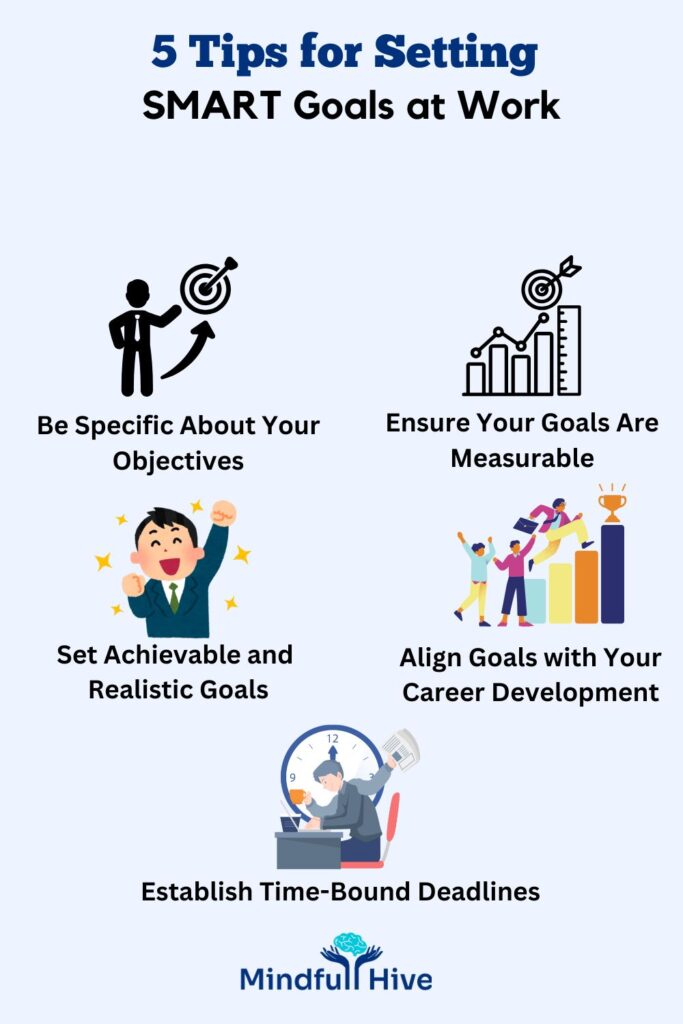
1. Be Specific About Your Objectives
In the past, I often set vague goals like "improve my skills" or "increase productivity." These lacked clarity and made it difficult to track progress. I learned that specificity is key. For instance, instead of saying, "I want to improve my communication skills," a more specific goal would be, "I will attend a public speaking workshop and deliver a presentation to my team by the end of the quarter."
How to Make Goals More Specific
- Define exactly what you want to achieve.
- Identify who is involved.
- Consider any necessary resources.
- Outline the reasons behind the goal.
2. Ensure Your Goals Are Measurable
Without measurable criteria, it's challenging to gauge progress or determine when a goal has been achieved. I once aimed to "read more industry-related articles," but without a quantifiable target, I couldn't assess my commitment. Revising this to "read two industry-related articles per week and summarize key takeaways" provided a clear metric to track.
Key Components of Measurable Goals
- Use numbers or percentages.
- Set milestones to track progress.
- Keep records of achievements.
3. Set Achievable and Realistic Goals
Early in my career, I ambitiously set a goal to "become a team leader within six months." While aspirational, it wasn't realistic given my experience level. I adjusted my approach to focus on building leadership skills by "volunteering for project coordination roles over the next year," which was more attainable and set the foundation for future leadership opportunities.
How to Assess Achievability
- Evaluate your current resources and skills.
- Consider external constraints.
- Set realistic timeframes.
4. Align Goals with Your Career Development
It's essential to ensure that your goals are relevant to your long-term career objectives. I once took on a project unrelated to my desired career path, which diverted time and energy. Now, I evaluate opportunities by asking, "Does this align with my career aspirations and add value to my professional growth?"
Why Relevance Matters
- Helps maintain motivation.
- Ensures efforts contribute to long-term success.
- Prevents unnecessary distractions.
5. Establish Time-Bound Deadlines
Without deadlines, goals can become perpetual tasks. I previously aimed to "complete a certification course," but without a timeframe, I procrastinated. Setting a deadline like "enroll in and complete the certification course by December 31st" provided the urgency needed to act.
Benefits of Time-Bound Goals
- Encourages consistent progress.
- Prevents procrastination.
- Creates a sense of urgency.
6. Break Down Larger Goals into Manageable Steps
Large goals can be daunting. When I decided to "launch a personal blog," the enormity of the task led to delays. Breaking it down into steps—such as "research hosting platforms," "design the website," and "publish the first post by the end of the month"—made the process manageable and less overwhelming.
How to Break Down Goals
- Identify major milestones.
- Assign deadlines to each step.
- Track progress along the way.
7. Regularly Review and Adjust Your Goals
Life and work environments are dynamic. I set a goal to "attend a networking event monthly," but during particularly busy periods, this became unfeasible. Recognizing the need for flexibility, I adjusted my goal to "attend a networking event every two months," balancing ambition with practicality.
How to Stay on Track
- Schedule periodic goal reviews.
- Adjust expectations based on circumstances.
- Keep a record of progress.
8. Celebrate Milestones and Achievements
Recognizing progress boosts motivation. After successfully "completing a challenging project ahead of schedule," I treated myself to a weekend getaway. Celebrating achievements, no matter how small, reinforces positive behavior and encourages continued effort.
Effective Ways to Celebrate Achievements
- Reward yourself with small treats.
- Share your success with colleagues or mentors.
- Reflect on what you’ve learned.
Frequently Asked Questions
Q1: What are some examples of SMART goals for performance reviews?
A1: Examples include:
- "Increase customer satisfaction scores by 10% over the next six months by implementing a new feedback system."
- "Reduce project completion times by 15% in the next quarter through process optimization."
Q2: How can SMART goals aid in career development?
A2: SMART goals provide a clear roadmap, making it easier to acquire new skills, gain experiences, and achieve milestones that align with long-term career aspirations.
Q3: Can you provide examples of SMART goals for employees?
A3: Certainly:
- "Complete advanced Excel training within the next two months to improve data analysis capabilities."
- "Develop and present a proposal for a new client onboarding process by the end of Q3."
Q4: How do SMART goals differ from OKRs?
A4: While both frameworks aim to set clear objectives, SMART goals focus on specific, measurable outcomes for individuals. In contrast, OKRs (Objectives and Key Results) are often used at the organizational level to align broader objectives with measurable key results.
Q5: What are some common mistakes to avoid when setting SMART goals?
A5: Common pitfalls include setting overly ambitious goals, lacking specificity, not establishing clear metrics, ignoring alignment with broader objectives, and failing to set realistic timeframes.
Conclusion
By integrating the SMART framework into your goal-setting process, you can create clear, actionable, and meaningful objectives that drive professional growth and success. Remember, the journey toward achieving your goals is as important as the destination. Celebrate your progress, learn from setbacks, and stay committed to your personal and professional development.