

I still remember the night my grandfather woke up gasping for air, his face pale with fear. My grandmother rushed to his side, her hands trembling as she helped him sit up. That terrifying moment sent our entire family into panic mode. Was it his heart? Was he choking? It turned out to be severe acid reflux, but the incident left us all wondering: can acid reflux actually kill you while you're sleeping?
Let me share what I've learned from that scary experience, my grandmother's detailed research notes, and countless conversations with doctors. If you've ever woken up coughing, choking, or feeling like something was stuck in your throat, this article is for you.
Short Answer: Can You Die from Acid Reflux in Your Sleep?
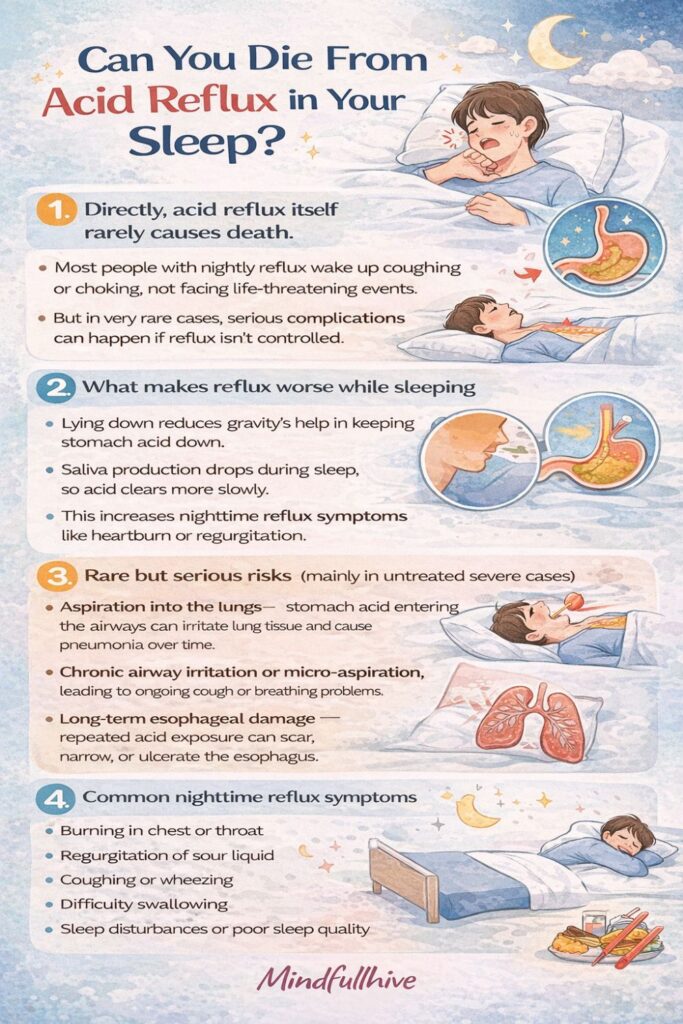
No, death from acid reflux during sleep is extremely rare. Chronic GERD can cause serious complications like aspiration pneumonia, esophageal damage, or Barrett's esophagus if left untreated, but fatal events in otherwise healthy sleepers are not commonly reported in medical literature. However, persistent nighttime reflux requires prompt medical attention to prevent long-term health issues.
How I Learned About Nighttime Reflux the Hard Way
After that frightening night with my grandfather, my grandmother became obsessed with understanding everything about acid reflux at night. She filled an entire notebook with information from doctors, articles, and home remedies she researched. I watched her transform from someone who barely knew what GERD was to becoming our family's expert on nighttime heartburn risks.
What surprised me most was learning that reflux behaves completely differently when you're lying down compared to when you're awake and moving around.
Why Nighttime Reflux Feels More Dangerous
Your Body's Natural Defense System Shuts Down
During the day, gravity helps keep stomach acid where it belongs. You swallow frequently, which clears acid from your esophagus. But when you're sleeping, everything changes:
Swallowing decreases dramatically
while you sleep. Normally, you swallow about 1,000 times during the day, but this drops to just 10-20 times per hour during sleep. This means acid that creeps up into your esophagus just sits there, causing more damage.
Gravity stops helping.
When you lie flat, there's no gravitational barrier preventing stomach contents from flowing backward into your esophagus. The angle makes it easier for acid regurgitation to occur.
Saliva production slows down.
Saliva naturally neutralizes acid, but you produce much less of it while sleeping. This gives stomach acid more time to irritate your esophageal tissue.
My grandmother wrote in her notes: "The body's cleanup crew goes on break at night, leaving the mess to sit and cause trouble."
The Choking Sensation That Scares Everyone
That terrifying feeling of waking up choking happens when stomach contents reach the back of your throat or even enter your airways. While scary, it's actually your body's protective reflex kicking in. Your throat muscles contract, you start coughing, and you wake up. This reflex usually prevents actual choking deaths from reflux.
However, repeated episodes can lead to aspiration pneumonia, which is genuinely serious.
Real Complications You Should Actually Worry About
Let me be honest with you. While death from GERD during sleep is incredibly rare, chronic untreated reflux can cause real problems that affect your quality of life and long-term health.
Aspiration Pneumonia: When Acid Reaches Your Lungs
Aspiration pneumonia occurs when stomach contents enter your lungs instead of going down into your stomach. This can cause:
- Persistent cough that won't go away
- Wheezing or difficulty breathing
- Chest infections that keep coming back
- Fever and fatigue
My grandfather experienced a mild case of this, which finally pushed us to take his GERD symptoms seriously. The doctor explained that stomach acid irritating lung tissue creates an environment where bacteria can thrive.
Esophageal Damage That Builds Over Time
Esophagitis means your esophagus becomes inflamed from repeated acid exposure. Over months and years, this can lead to:
Strictures, which are narrowed areas in your esophagus that make swallowing difficult. Imagine trying to eat when your food pipe is partially blocked. Scary, right?
Barrett's esophagus, a condition where the esophageal lining changes to protect itself from acid. While Barrett's itself isn't cancer, it increases the risk of esophageal cancer over time. About 10-15% of people with chronic GERD develop Barrett's esophagus.
Ulcers and bleeding in the esophagus can occur with severe, untreated reflux.
Sleep Disruption Creates a Vicious Cycle
Nocturnal reflux doesn't just affect your esophagus. It destroys your sleep quality, which then affects everything else:
- Daytime fatigue and poor concentration
- Increased stress and anxiety
- Weakened immune system
- Higher risk of accidents
My grandmother noted that my grandfather's mood improved dramatically once we got his nighttime reflux under control. He wasn't just physically healthier; he was happier and more energetic.
The Dangerous Connection Between Reflux and Sleep Apnea
Here's something that surprised our family: sleep apnea and GERD often occur together, creating a double threat.
Sleep apnea causes repeated breathing pauses during sleep. These pauses create pressure changes in your chest that can actually pull stomach acid up into your esophagus. Meanwhile, acid reflux can irritate your throat and airways, making sleep apnea worse.
If you experience both loud snoring with gasping and nighttime heartburn, you need to address both conditions. My grandfather had mild sleep apnea that we didn't know about until we investigated his reflux thoroughly.
The good news? Treating one condition often helps improve the other. When we elevated his sleeping position and managed his diet, both his reflux and sleep quality improved significantly.
Tests Doctors Use to Diagnose Nighttime Reflux
After that scary choking episode, we went through several diagnostic tests. Let me walk you through what to expect:
pH Monitoring: Measuring Acid Exposure
A small probe placed in your esophagus measures acid levels over 24 hours. You go about your normal activities, including sleeping, while the device records data. This test definitively shows whether and when acid is reaching your esophagus.
Endoscopy: Looking Inside
An endoscopy involves a thin tube with a camera examining your esophagus, stomach, and upper small intestine. The doctor can see inflammation, ulcers, or other damage directly. My grandfather had one, and while he wasn't thrilled about it, the procedure took less than 20 minutes and provided valuable information.
Sleep Study: Checking for Apnea
If your doctor suspects sleep apnea along with reflux, they might recommend a sleep study. You spend a night in a sleep lab where they monitor your breathing, oxygen levels, and sleep patterns.
Evidence-Based Steps to Reduce Nighttime Reflux
This is where my grandmother's research notebook became pure gold. She tested different strategies with my grandfather and carefully tracked what worked.
Diet Changes That Actually Matter
Stop eating 2-3 hours before bed. This simple change made the biggest difference for my grandfather. His stomach needed time to empty before lying down.
Avoid these trigger foods in the evening:
- Acidic foods like tomatoes, citrus fruits, and vinegar
- Spicy dishes with chili or pepper
- Fried and fatty foods that slow digestion
- Chocolate (I know, sad but true)
- Mint, which relaxes the valve between stomach and esophagus
- Coffee and caffeinated drinks
- Carbonated beverages
Focus on these gentler options:
- Oatmeal and whole grains
- Bananas and melons
- Green vegetables like broccoli and asparagus
- Ginger tea (my grandmother swears by this)
- Almonds as an evening snack
- Chamomile tea before bed
Sleep Position Strategy
Elevate the head of your bed by 6-8 inches. Don't just pile up pillows; that can actually make reflux worse by bending your body at the waist. We placed wooden blocks under the bed frame's head posts. You can also use a wedge pillow designed for reflux.
Sleep on your left side. Studies show this position reduces acid regurgitation because of how your stomach sits in relation to your esophagus. When you lie on your right side, the junction between your stomach and esophagus sits below the acid level, making reflux easier.
My grandfather resisted this at first because he'd always been a right-side sleeper. But after a week of left-side sleeping, he admitted the difference was remarkable.
Weight Management and Clothing
Extra weight around your midsection puts pressure on your stomach, pushing acid upward. Even losing 5-10 pounds can significantly reduce GERD symptoms.
Wear loose clothing to bed. Tight waistbands or pajamas increase abdominal pressure and promote reflux.
Lifestyle Adjustments
Don't lie down right after eating.
Stay upright for at least three hours after your last meal. My grandmother would gently remind my grandfather to take an evening walk after dinner, which became their special time together.
Avoid late-night snacking.
I know it's tempting to raid the fridge before bed, but those midnight snacks are reflux triggers waiting to happen.
Manage stress.
Anxiety increases stomach acid production. My grandmother taught my grandfather simple breathing exercises before bed, which helped him relax.
Medications and Treatment Options
Over-the-Counter Solutions
Antacids like Tums or Rolaids provide quick relief by neutralizing stomach acid. Keep them by your bedside for occasional flare-ups.
H2 blockers such as famotidine reduce acid production for longer periods, typically 12 hours.
Prescription Medications
PPI (proton pump inhibitors) like omeprazole work by blocking acid production at the source. These are highly effective for severe GERD but should be used under medical supervision for long-term treatment.
My grandfather takes a PPI in the morning, which controls his daytime and nighttime symptoms. The doctor regularly reviews whether he still needs it and monitors for any side effects.
When Surgery Might Be Considered
For severe cases that don't respond to medication and lifestyle changes, doctors might recommend fundoplication surgery, which strengthens the valve between stomach and esophagus. This is typically a last resort after other treatments have failed.
Red Flags: When to Seek Urgent Medical Care
Call your doctor immediately if you experience:
- Vomiting blood or material that looks like coffee grounds
- Black, tarry stools indicating bleeding in your digestive tract
- Severe chest pain that doesn't improve with antacids
- Sudden breathing problems or wheezing
- High fever after experiencing nighttime coughing
- Difficulty swallowing or feeling like food is stuck
- Unintentional weight loss along with reflux symptoms
If heartburn or regurgitation wakes you up multiple nights per week despite home measures, schedule a doctor's appointment. Don't wait for things to get worse.
FAQs About Deadly Acid Reflux During Sleep
Can acid reflux cause you to choke in your sleep?
Very rarely results in actual choking. Most people with nighttime reflux experience coughing or regurgitation, and documented fatal choking cases from reflux alone are not found in large medical reviews. However, aspiration (stomach contents entering the lungs) can cause pneumonia, which is serious and requires medical attention.
Does GERD increase my risk of dying?
Untreated chronic GERD increases risks of esophageal damage and other complications over time, but GERD itself is not commonly a direct cause of death in otherwise managed patients. With proper treatment, most people with GERD live normal, healthy lives. Seek treatment for persistent symptoms to prevent long-term issues.
Can reflux cause breathing problems at night?
Yes, nocturnal reflux can irritate the airways and worsen cough, asthma, or lead to aspiration events. If you have both reflux symptoms and snoring or gasping, get evaluated for sleep apnea. The two conditions often occur together and treating both improves overall health outcomes.
What are the red flags that need urgent care?
Vomiting blood, black stools, severe chest pain, sudden breathing distress, high fever after coughing require immediate medical attention. Also see a doctor if reflux awakens you multiple nights per week or if you experience difficulty swallowing, unintentional weight loss, or persistent hoarseness.
Will raising my bed help prevent dangerous reflux at night?
Elevating the head by 6-8 inches or using a wedge reduces reflux episodes at night and lowers risk of aspiration compared with lying flat. It's a simple, effective measure alongside diet and medication when advised. Don't just stack pillows; elevate the entire upper body to maintain proper alignment.
2 Quick Tips That Made the Biggest Difference
Stop eating 2-3 hours before bed. Late meals increase stomach volume and reflux chance. Making this one change often reduces nighttime symptoms quickly. My grandfather saw improvement within just three days of following this rule.
Sleep elevated and on your left side. Elevating the upper body and lying on the left can reduce reflux exposure to the esophagus and lower aspiration risk. This combination worked better than either strategy alone for my grandfather.
My Personal Takeaway and Action Plan
That terrifying night when my grandfather woke up gasping changed how our family thinks about health. We learned that acid reflux isn't just an annoying discomfort; it's a condition that deserves attention and proper management.
The good news? With the right approach, you can sleep peacefully without fear. My grandfather hasn't had a serious nighttime reflux episode in over a year. He follows his diet plan, takes his medication as prescribed, and sleeps on his elevated, left-side-positioned bed.
Here's your 2-week action plan to reduce nighttime heartburn risks:
Week 1: Make immediate changes
- Stop eating three hours before bed starting tonight
- Elevate your bed head by 6-8 inches
- Switch to left-side sleeping
- Keep a symptom diary noting what you eat and when symptoms occur
Week 2: Fine-tune your approach
- Eliminate your specific trigger foods based on your diary
- Add ginger tea to your evening routine
- Practice stress-reduction techniques before bed
- Schedule a doctor appointment if symptoms persist
Doctor visit checklist:
- Bring your symptom diary
- List all current medications
- Describe your sleep quality
- Mention any breathing problems or cough
- Ask about tests like endoscopy or pH monitoring if needed
Remember, you don't have to live with the fear of choking at night. GERD is highly treatable, and taking action now prevents serious complications down the road. My grandfather's experience taught me that sometimes the scariest moments push us to make the healthiest changes.
If you're dealing with acid reflux, don't ignore it. Your future self will thank you for addressing it today.