
I'll never forget the morning I found my grandmother hunched over her worn notebook, carefully documenting which foods affected my grandfather's health. She'd been doing this for years, tracking everything that seemed to make his thyroid medication work better or worse. That notebook became my guide when I started experiencing my own thyroid issues last year.
Let me share what I've learned through her research and my own journey about what food to avoid in thyroid conditions. This isn't just medical jargon. These are practical insights that actually helped me feel better.
Quick Answer: Foods to Skip for Better Thyroid Health
Avoid foods that interfere with thyroid hormones or medication: high-iodine seaweed and kelp, large amounts of raw cruciferous vegetables, excess soy, and calcium or iron supplements taken at the same time as levothyroxine. Space medication 3 to 4 hours from these foods.
When people ask what food to avoid in thyroid problems, they often expect a simple list. But understanding why certain foods matter helps you make better choices. I learned this the hard way when my energy levels kept dropping despite taking my medication regularly. Turns out, my morning calcium-fortified almond milk was blocking my levothyroxine absorption.
Why Some Foods Mess With Your Thyroid Medicine
My doctor explained something crucial that changed how I approached breakfast. Foods to avoid with hypothyroidism aren't necessarily unhealthy, but they can block your medication from working properly.
Levothyroxine needs an empty stomach to work. I used to gulp it down with my morning coffee and wonder why I felt exhausted by noon. The issue? Coffee contains compounds that reduce medication absorption by up to 55 percent when taken together.
Here's what actually interferes with your thyroid medication:
- Calcium-rich foods like yogurt, cheese, and fortified plant milks can bind to levothyroxine in your stomach. This stops your body from absorbing the medication properly. I switched to taking my pill first thing in the morning with plain water, then waiting a full hour before my breakfast smoothie.
- Iron supplements cause similar problems. My grandmother's notebook had this written in red ink: "Space iron 4 hours from thyroid pill." She was right. Whether it's a supplement or iron-rich foods, iron creates compounds with levothyroxine that your intestines can't absorb.
- Soy products contain isoflavones that can interfere with thyroid hormone production. This doesn't mean you need to eliminate soy completely. I still enjoy tofu occasionally, but I eat it for lunch or dinner, never close to when I take my medication.
- High-fiber meals deserve attention too. I love my morning bowl of oats, but fiber slows down how fast your stomach empties. This means your medication sits there longer, potentially reducing absorption. My solution? Take the pill when I first wake up, then have breakfast 60 minutes later.
- Grapefruit juice and other citrus juices can decrease how much levothyroxine your body absorbs. I learned this after wondering why my energy crashed every time I had my "healthy" morning routine of medication followed by fresh orange juice.
The Truth About Cruciferous Vegetables and Goitrogens
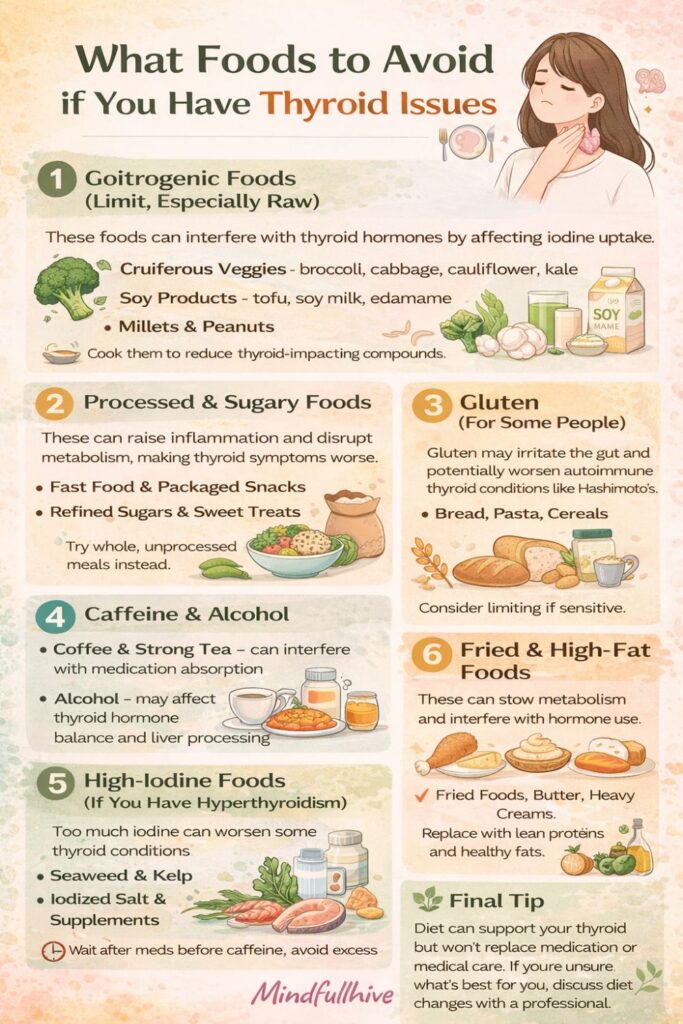
This topic stressed me out initially. Every article about foods to avoid with thyroid problems mentioned broccoli and cauliflower. Since my family is vegetarian, these vegetables form a huge part of our diet.
Here's what I discovered: Cruciferous vegetables contain natural compounds called goitrogens that can interfere with thyroid function, but only in massive raw amounts. We're talking pounds of raw kale daily, which nobody actually eats.
Goitrogenic foods include broccoli, cauliflower, cabbage, Brussels sprouts, kale, and bok choy. My grandmother's research confirmed what modern studies show: cooking these vegetables significantly reduces their goitrogenic effect.
I still eat cruciferous veggies almost daily. The difference now? I steam my broccoli, roast my cauliflower, and sauté my cabbage. Cooking breaks down most of the problematic compounds while keeping all the beneficial nutrients like vitamin C, folate, and cancer-fighting compounds.
People with Hashimoto's disease often worry more about goitrogens. I have Hashimoto, and my endocrinologist told me that unless I'm iodine-deficient (which is rare in developed countries), normal amounts of cooked cruciferous vegetables won't harm my thyroid.
The key is moderation and preparation. Raw kale smoothies every morning? That might be too much. Stir-fried bok choy twice a week? Perfectly fine.
Understanding Iodine: When Too Much Becomes a Problem
Iodine confuses a lot of people. We need it for thyroid hormone production, but too much can worsen certain thyroid conditions.
My aunt developed hyperthyroidism after taking kelp supplements for "natural health." She thought more iodine would help her metabolism. Instead, it triggered thyroid overactivity that required medical treatment.
High-iodine foods to watch include:
Seaweed and kelp contain extreme amounts of iodine. A single sheet of nori has reasonable amounts, but kelp supplements can provide 5,000 percent of your daily needs. This massive dose can trigger or worsen hyperthyroidism.
Iodine-rich foods like certain fish and dairy contain moderate amounts. These are generally safe and even beneficial for most people with hypothyroidism. The problem comes from concentrated sources like supplements or excessive seaweed consumption.
I avoid iodine supplements unless my doctor specifically prescribes them. Blood tests show my iodine levels are fine from regular food sources. Adding supplements would risk pushing me into excess territory.
For people with Graves' disease or other forms of hyperthyroidism, limiting high-iodine foods becomes more important. But for most of us with hypothyroidism, moderate iodine from food causes no problems.
The Timing Game: When to Take Levothyroxine
This changed everything for me. Understanding medication timing finally explained why my thyroid levels fluctuated so much.
Take levothyroxine on an empty stomach, first thing in the morning. I keep my pills and a glass of water on my nightstand. Before I even get out of bed, I take my medication. Then I wait.
The waiting matters. Your stomach needs to be empty when you take levothyroxine, and it needs to stay relatively empty for at least 30 to 60 minutes afterward. This gives the medication time to absorb properly.
Here's my typical morning schedule:
- 6:30 AM: Wake up, take levothyroxine with water while still in bed.
- 7:00 AM: Get ready for the day. I can have plain water during this time.
- 7:30 AM: Eat breakfast. Now my medication has had time to absorb.
- 10:30 AM: If I need calcium or iron supplements, I take them now, a full 4 hours after my thyroid medication.
Processed foods, sugary snacks, and heavy meals don't directly block levothyroxine, but they affect overall thyroid health. My energy stabilized when I reduced processed foods and added more whole vegetables, lentils, and nuts.
Foods That Deserve Limits But Not Complete Elimination
Some foods need moderation rather than total avoidance.
- Gluten matters only if you have celiac disease or non-celiac gluten sensitivity. About 20 percent of people with Hashimoto's disease have celiac. I got tested, and my results were negative. So I still eat whole wheat chapatis without problems. If you haven't been tested, it's worth checking, because undiagnosed celiac can worsen autoimmune thyroid conditions.
- Soy appears throughout vegetarian diets. Paneer might be traditional, but tofu and tempeh provide excellent protein too. Research shows moderate soy intake (a serving or two daily) doesn't significantly affect thyroid function in people taking adequate levothyroxine. The key? Don't eat soy products within 4 hours of taking your medication.
- Caffeine doesn't damage your thyroid, but coffee and tea reduce medication absorption when consumed together. I love my morning chai, but now I drink it 90 minutes after taking my pill. This simple change improved my energy levels noticeably.
- Alcohol deserves mention. My grandfather's notebook had observations about how drinking affected his next-day medication effectiveness. While moderate alcohol doesn't directly interfere with levothyroxine, it can affect liver function, which plays a role in converting thyroid hormones to their active form.
What to Eat Instead: Building a Thyroid-Friendly Plate
Focusing only on restrictions makes any diet miserable. My grandmother's approach was smarter: emphasize foods that support thyroid health.
- Selenium-rich foods became my go-to snack. Two Brazil nuts provide a full day's selenium requirement. This mineral helps convert thyroid hormones to their active form. I keep a small container of Brazil nuts in my bag for afternoon snacks.
- Vegetables form the foundation of every meal. I rotate between different colored vegetables to get various nutrients. Roasted sweet potatoes, sautéed spinach with garlic, stir-fried bell peppers, and steamed green beans all appear regularly on my plate.
- Selenium also comes from sunflower seeds and mushrooms. I sprinkle roasted sunflower seeds on salads and add mushrooms to curries and stir-fries.
- Legumes provide protein and fiber while supporting stable blood sugar. Since my family avoids eggs, we rely heavily on dal, chickpeas, kidney beans, and black beans. These keep me full and provide steady energy without the blood sugar spikes that come from processed foods and refined carbohydrates.
- Healthy fats matter too. Ghee, olive oil, coconut oil, nuts, and seeds provide essential fatty acids that support hormone production. I cook most vegetables in a teaspoon of ghee or olive oil rather than using excessive amounts.
- Whole grains like brown rice, quinoa, and oats give me sustained energy. Yes, they contain fiber that could theoretically slow medication absorption, but eating them several hours after taking levothyroxine eliminates this concern.
A Day in My Thyroid-Friendly Eating
Here's what a typical day looks like for me now:
- Morning: Take levothyroxine at 6:30 AM with water. Wait until 7:30 AM for breakfast. I usually have oatmeal cooked with almond milk (but not the calcium-fortified kind), topped with berries, ground flaxseed, and a tablespoon of almond butter. Sometimes I switch to whole wheat toast with mashed avocado and tomatoes.
- Mid-morning: Two Brazil nuts for selenium and a cup of green tea.
- Lunch: A large bowl with brown rice or quinoa as the base, topped with roasted vegetables (sweet potato, broccoli, cauliflower, all cooked), chickpeas or black beans, and a tahini-lemon dressing. Or sometimes a vegetable-packed dal with whole wheat roti.
- Afternoon: Sliced vegetables with hummus, or a small handful of mixed nuts.
- Dinner: Stir-fried tofu with mixed vegetables over rice noodles, or a vegetable curry with lentils and brown rice, or stuffed bell peppers with quinoa and black beans.
- Evening: If I'm still hungry, I might have roasted chickpeas or a piece of fruit.
Notice what's missing? Processed foods, packaged snacks, and refined sugars. These provide empty calories that made my energy crash and my weight fluctuate when my thyroid was poorly controlled.
When to Call Your Doctor
Managing thyroid health goes beyond food choices. You need regular monitoring.
I get my thyroid function tested every 3 months. The tests check TSH, Free T4, and Free T3 levels. These numbers tell my doctor if my levothyroxine dose is working properly.
Symptoms that need immediate medical attention include:
Sudden weight changes (gaining or losing more than 5 pounds in a week without diet changes), heart palpitations or racing heartbeat, extreme fatigue that doesn't improve with rest, severe anxiety or mood changes, noticeable swelling in your neck, or difficulty swallowing.
If you're struggling with hypothyroidism despite taking medication, ask your doctor about checking nutrient levels. Iron deficiency, vitamin D deficiency, and vitamin B12 deficiency can all worsen thyroid symptoms. I discovered my vitamin D was extremely low, and supplementing (taken 4 hours away from levothyroxine) helped my energy improve.
Some people need medication adjustments based on food timing. If you travel frequently or work night shifts, talk with your doctor about the best time to take levothyroxine consistently.
Frequently Asked Questions About Thyroid and Food
Can I eat broccoli if I have hypothyroidism?
Yes, absolutely. Eat broccoli, cauliflower, and other cruciferous vegetables in normal amounts after cooking them. The heat significantly reduces their goitrogenic compounds. I eat these vegetables 4 to 5 times per week without any problems with my thyroid levels.
Does soy completely block thyroid meds?
No, soy doesn't completely block your medication. It can reduce absorption if you eat soy products right when you take levothyroxine. Space them apart by at least 4 hours. I enjoy tofu for lunch and dinner without issues because I take my medication early in the morning.
Is seaweed always bad for thyroid health?
Seaweed isn't bad for everyone. It's high in iodine, which can worsen hyperthyroidism or trigger thyroid problems in sensitive people. If you have hypothyroidism and normal iodine levels, small amounts of nori in sushi are usually fine. Avoid kelp supplements and large amounts of seaweed unless your doctor recommends them.
When should I take levothyroxine for best results?
Take levothyroxine first thing in the morning on an empty stomach. Wait at least 30 to 60 minutes before eating. Avoid calcium, iron, soy, coffee, and high-fiber foods during this window. Some people do better taking it at bedtime on an empty stomach. Talk with your doctor about what works for your schedule, then stay consistent.
Will cutting gluten help my thyroid function?
Only cut gluten if you have celiac disease or confirmed gluten sensitivity. About 20 percent of Hashimoto patients have celiac, but if you test negative, eliminating gluten probably won't improve your thyroid function. Focus instead on reducing processed foods and eating more whole vegetables, fruits, legumes, and nuts.
Two Quick Tips for Better Thyroid Health
- Tip One: Create a medication routine that sticks. I keep my levothyroxine bottle next to a glass of water on my nightstand. My phone alarm goes off at the same time every morning, even on weekends. This consistency helps maintain stable thyroid hormone levels. Wait a full hour before having coffee, breakfast, or calcium and iron supplements.
- Tip Two: Swap one processed snack daily for something that supports thyroid health. Instead of reaching for packaged cookies or chips, grab two Brazil nuts for selenium. Or slice bell peppers and dip them in hummus. These small changes add up. My energy improved noticeably when I replaced my afternoon vending machine habit with real food.
Final Thoughts on What Food to Avoid in Thyroid Management
Understanding what food to avoid in thyroid conditions transformed my health. But it's not about perfection or fear. It's about timing, moderation, and choosing whole foods over processed options most of the time.
My grandmother's meticulous notebook taught me that managing thyroid health requires patience and attention to details. Every body responds differently. What works perfectly for me might need adjustment for you.
The most important lessons I learned: Take levothyroxine consistently on an empty stomach. Space problematic foods like calcium, iron, and soy several hours away from medication. Cook your cruciferous vegetables instead of eating them raw in huge amounts. Avoid iodine supplements unless prescribed. Focus on whole, unprocessed foods that support overall health.
Your hypothyroidism diet doesn't need to be restrictive or complicated. It needs to be sustainable, nourishing, and timed properly with your medication. Small changes create big improvements over time.
If you're still struggling despite following foods to avoid when taking levothyroxine guidelines, don't hesitate to discuss it with your doctor. Sometimes medication doses need adjustment. Sometimes additional testing reveals other nutrient deficiencies affecting your symptoms.
Living well with thyroid issues is absolutely possible. It just takes some knowledge, consistency with medication timing, and choosing foods that work with your body instead of against it.