
Quick Answer: For health benefits, choose dark chocolate with at least 70% cocoa — it is higher in flavanols and lower in added sugar than milk chocolate. Eat a small serving (20-30g) a few times a week for antioxidant and heart-health benefits.
How One Late Night Snack Changed the Way I Think About Chocolate
It started on a Sunday evening, about two years ago. I was sitting in my nani's kitchen watching her write in this worn-out yellow notebook she's been keeping for years. Inside it, she had pages and pages of home remedies and food notes she collected to help my grandfather manage his diabetes. One entry stopped me cold: "Dark chocolate, 2 squares only — good for blood, good for heart."
I stared at that line for a full minute. Chocolate. Good for you. Really?
I had grown up thinking all chocolate was basically sugar in a fancy wrapper. But my curiosity took over, and I spent the next few weeks diving into research, talking to nutritionists, and reading everything I could find. What I discovered genuinely surprised me.
If you have ever wondered which chocolate is good for health, this blog has every answer you need. Not the overly technical kind. The real, practical kind, written by someone who loves food and actually tried to understand this properly.
What Makes Dark Chocolate the Healthiest Choice?
The Science Behind Cocoa and Your Body
When you eat chocolate, what your body actually responds to are the flavanols — a type of polyphenols found in cocoa beans. These are antioxidants that fight oxidative stress and inflammation in the body. The higher the cocoa content in your bar, the more flavanols it contains.
Dark chocolate with 70% cocoa or higher retains a much larger amount of these compounds compared to milk chocolate or white chocolate. This is why experts from Cleveland Clinic and Healthline consistently point to dark chocolate as the healthier pick.
Here is a simple way to think about it: imagine cocoa as a nutrient-dense fruit. The more you process it, dilute it with milk, and pile on added sugar, the fewer real benefits remain. Dark chocolate, especially bars with 70% to 85% cocoa, keeps the good stuff mostly intact.
Flavanols and Polyphenols — Why They Matter
Flavanols are not just a buzzword on a fancy chocolate wrapper. Research has shown they help improve blood flow, protect cells from damage, and support brain function. The polyphenols in cocoa act as natural defenders inside your body, reducing the kind of cellular damage that builds up from stress, poor diet, and aging.
A review published through nutrition science platforms (including PFNDAI) highlights that cocoa flavanols positively influence heart health markers, including blood vessel flexibility and cholesterol balance. These are not minor effects — they matter for long-term wellness.
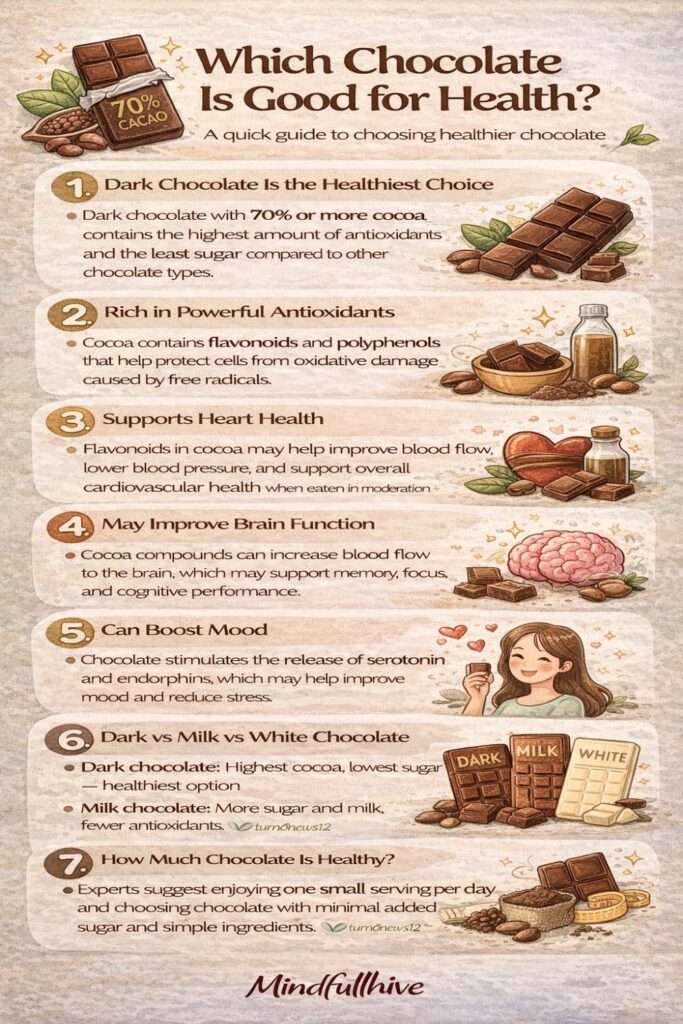
7 Proven Health Benefits of Dark Chocolate
1. Supports Heart Health and Healthy Blood Pressure
One of the most well-documented benefits of dark chocolate is its impact on cardiovascular health. The flavanols in cocoa encourage the lining of arteries to relax, which can lead to modest reductions in blood pressure. Small clinical trials have shown this effect, though it is not a replacement for medical treatment.
For my grandfather, this was especially relevant. His cardiologist had mentioned that small amounts of high-quality dark chocolate are not off-limits for people managing heart health, provided the sugar content is low. That matched exactly what my family's old notes said.
2. Rich in Antioxidants That Fight Cell Damage
Dark chocolate is one of the most antioxidant-rich foods you can eat. It scores higher than blueberries and acai berries on many antioxidant tests. These antioxidants help neutralise free radicals — the unstable molecules that damage cells and contribute to aging and chronic disease.
3. May Improve Brain Function and Focus
The flavanols in dark chocolate also increase blood flow to the brain. This has been linked to sharper focus, better memory, and even a reduced risk of neurodegenerative conditions over time. If you have ever felt oddly alert after a small square of good dark chocolate, that is likely why.
4. Natural Mood Booster
Cocoa contains small amounts of compounds like phenylethylamine and serotonin precursors that influence mood. That slight lift you feel after eating a piece of quality dark chocolate is real, not imagined. It is part of why so many people reach for chocolate when they are stressed.
5. Good for Skin Health
The polyphenols and antioxidants in dark chocolate help protect the skin from UV-related oxidative damage. Regular moderate consumption has been linked to improved skin hydration and texture in some studies. This is not a skincare product, of course, but it is a nice side benefit.
6. May Help With Weight Management (When Eaten Right)
Here is where weight loss and chocolate get interesting. Dark chocolate has a higher fat content than milk chocolate, but its fats are mostly heart-healthy oleic acid (the same found in olive oil). More importantly, dark chocolate is more satiating. A small piece can reduce cravings for sweet, salty, and fatty foods — which means you often eat less overall.
Pair a square of dark chocolate with a handful of almonds and you have a snack that actually keeps you full. That is something a milk chocolate bar high in sugar simply cannot offer.
7. Better Blood Sugar Response Than Milk Chocolate
For people mindful of blood sugar (like my grandfather), dark chocolate with low added sugar has a lower glycaemic impact than milk chocolate. It does not spike blood sugar as sharply, especially when eaten in appropriate serving sizes.
Risks and Cautions You Should Know
Calories Add Up Fast
Dark chocolate is not calorie-free. A 30g serving size typically contains around 150-170 calories. Eat mindfully. Two or three squares is a portion, not a whole bar.
Sugar Content Varies Widely
Not all dark chocolate bars are equal. Some brands label their product as dark chocolate but pack in 15-20g of sugar per 30g serving. Always check the nutrition label. Look for less than 10g of added sugar per 30g.
Caffeine and Theobromine
Dark chocolate contains caffeine and theobromine. For most people, the amounts in 20-30g are harmless. But if you are sensitive to caffeine or eating late at night, keep this in mind. Avoid it in the evening if you have trouble sleeping.
Not Suitable in Large Amounts for Everyone
People with irritable bowel syndrome, migraines triggered by amines, or certain heart medications should check with their doctor before making dark chocolate a daily habit. The benefits are real, but moderation is always key.
How to Read Chocolate Labels in India: A Practical Guide
The Comparison Table: 70% vs 85% vs Milk Chocolate
| Factor | Dark 70% Cocoa | Dark 85% Cocoa | Milk Chocolate |
| Cocoa % | 70% | 85% | 30-45% |
| Sugar per 30g | ~8-10g | ~5-6g | ~16-18g |
| Calories per 30g | ~160 kcal | ~155 kcal | ~170 kcal |
| Flavanols | High | Very High | Low |
| Antioxidants | High | Very High | Low |
| Best for | Everyday treat | Max benefit | Occasional only |
| Indian Brands | Amul Dark, Mason | Manam, Paul | Cadbury Dairy Milk |
What to Look for on the Label
- Cocoa percentage: Look for 70% cocoa or higher
- Sugar per 30g: Aim for under 10g added sugar
- Ingredients: Cocoa mass or cocoa solids should be first on the list
- No vegetable fat or palm oil — these dilute quality
- Emulsifiers: Soy lecithin is fine; avoid artificial ones
- Look for single-origin or craft Indian brands for better quality control
Best Dark Chocolate Brands in India (2025-26 Picks)
Budget-Friendly Options (Available on Amazon and BigBasket)
Amul Dark Chocolate (55% and 75% variants) — Widely available, affordable, and a solid starting point. The 75% cocoa variant works well as a daily dark chocolate with decent flavanol levels.
Bournville Dark (45-50%) — Slightly lower cocoa, but still a better option than milk chocolate. Good for beginners transitioning from sweet chocolate.
Mid-Range and Craft Options
Mason and Co (Pondicherry) — Indian single-origin dark chocolate brand with bars ranging from 55% to 85% cocoa. Clean ingredients, no added vegetable fat.
Manam Craft Chocolate (Hyderabad) — Award-winning Indian craft chocolate with excellent 70% cocoa bars sourced from Idukki and Coorg farms.
Paul and Mike — Another quality Indian brand with transparent ingredient lists and high antioxidant content. Their 85% cocoa bar is among the best locally made options.
Buyer's Checklist for Indian Shoppers
- Cocoa % on front label (aim for 70% or above)
- Sugar content: check per 30g serving size on nutrition table
- No vegetable fat in the ingredient list
- Price per 100g (craft bars: Rs 150-400; mass market: Rs 50-100)
- Available on Amazon India, BigBasket, or brand websites
- Check for batch date — fresh chocolate retains more polyphenols
How Much Dark Chocolate Should You Actually Eat?
The Right Serving Size for Maximum Benefits
Most nutrition experts recommend 20 to 30 grams of dark chocolate per day — that is roughly one to two small squares depending on the bar. This serving size gives you a meaningful dose of flavanols without overloading on calories or sugar.
In our house, we break off two squares after lunch. It became a quiet ritual. Small enough to feel like a treat, meaningful enough to count as a health habit.
Best Times to Eat Dark Chocolate
- After a meal — slows sugar absorption, reduces cravings
- As an afternoon snack — pairs well with a handful of walnuts or fresh fruit
- Before exercise — some research suggests cocoa flavanols support circulation during workouts
- Avoid late at night if caffeine-sensitive
Smart Pairings for Better Nutrition
Pair your dark chocolate with fresh strawberries, a few walnuts, or a cup of green tea. These combinations enhance antioxidant absorption and add satisfying texture without loading up on calories. As a vegetarian household, this kind of mindful snacking fits perfectly into our daily meals.
Related Reading from MindfullHive
If you are exploring healthy eating habits, you might also enjoy these reads from our blog:
10 Green Grapes Benefits That Will Make You Eat Them Every Day
How Peanut Butter Helped Me Lose 8 Kgs: Is Peanut Butter Good for Weight Loss?
How Coconut Oil Benefits for Hair Changed My Life
Final Thoughts: Which Chocolate Is Good for Health?
The answer is clear: dark chocolate with 70% cocoa or higher is the one worth choosing. It has the flavanols, the antioxidants, the heart health support, and the mood benefits. It has less added sugar than milk chocolate and far more nutritional value.
It is not a cure. It is not medicine. But eaten thoughtfully — a small serving size of quality dark chocolate a few times a week — it is genuinely one of the more enjoyable healthy habits you can build.
My family's old notes had it right. Two squares. Good for blood, good for heart. Sometimes the simplest wisdom is the most accurate.
If you found this helpful, share it with someone who always feels guilty eating chocolate. Maybe it is time to swap the guilt for something better.
Frequently Asked Questions
Q1: Is dark chocolate really healthy?
Yes. Dark chocolate with 70% cocoa or more contains flavanols and antioxidants that support heart and brain health. Choose low-sugar bars and eat in moderation for real benefits.
Q2: How much dark chocolate should I eat daily?
About 20 to 30 grams (one to two small squares) most days is the recommended serving size. This gives you the benefits without excess calories or added sugar.
Q3: Is milk chocolate bad for you?
It is higher in sugar and lower in flavanols than dark chocolate. Milk chocolate is fine occasionally but is not the best daily choice if you care about heart health or weight loss.
Q4: Can dark chocolate help lower blood pressure?
Small clinical studies show modest blood pressure reductions with regular consumption of flavanol-rich chocolate. Effects vary between individuals and are not a substitute for prescribed treatment.
Q5: Which Indian brands sell good dark chocolate?
Look for brands like Mason and Co, Manam Craft Chocolate, Paul and Mike, and Amul Dark 75% on Amazon India or BigBasket. Always check the cocoa % and sugar per 30g on the label.
2 Quick Tips Before You Shop
- Prefer bars with cocoa solids listed first and sugar below 10g per 30g
- Pair a small piece with fruit or a handful of nuts to slow sugar absorption and boost satiety.