
I still remember the first time period cramps hit me so hard that I had to sit on the bathroom floor for ten minutes before I could stand up straight again. If you are here searching for how to stop period pain immediately at home, I am guessing you are curled up somewhere right now, phone in hand, hoping for a quick fix. I cannot promise your cramps will vanish in sixty seconds, but I can walk you through what actually helped me and what doctors genuinely recommend, instead of another list of ten random kitchen remedies copied from somewhere else.
I am a 22 year old vegetarian who used to dread that time of the month every single cycle. Over the years, through trial, error, and a few honest conversations with my gynaecologist, I found a small set of things that reliably take the edge off. This is that list, written the way I would explain it to a friend.
How to Stop Period Pain Immediately at Home: The Quick Answer
If your cramps are hurting right now and you need relief fast, here is the short version:
- Place a heating pad or hot water bottle on your lower abdomen
- Get into a comfortable, curled up position
- Sip warm water slowly
- Try gentle stretching or slow breathing
- If it is safe for you, take an appropriate anti-inflammatory pain reliever
These steps will not always erase period pain completely, but together they genuinely reduce how intense it feels within twenty to thirty minutes for most people.
Why Does Period Pain Happen?
Before jumping into remedies, it helps to know what your body is actually doing. During your period, your uterus contracts to shed its lining, and these uterine contractions are triggered by hormone-like compounds called prostaglandins. Higher prostaglandin levels usually mean stronger cramps, which is also why some months feel far worse than others.
This cramping can also cause lower abdomen pain that spreads to your lower back or thighs, along with bloating and sometimes nausea. None of this means something is wrong with you. It is a normal biological process, though it is completely fair to want relief from it.
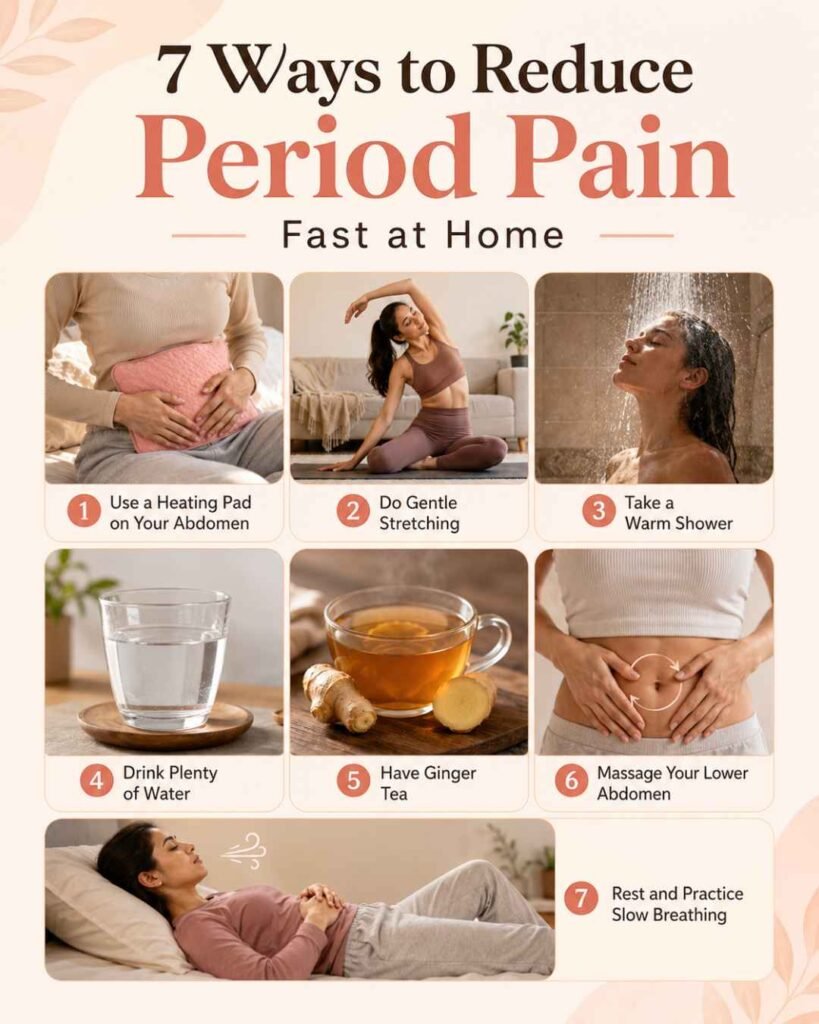
7 Ways to Reduce Period Pain Fast at Home
I tested most of these on myself before deciding they were worth sharing. Here is what genuinely works.
1. Apply Heat to Your Lower Abdomen
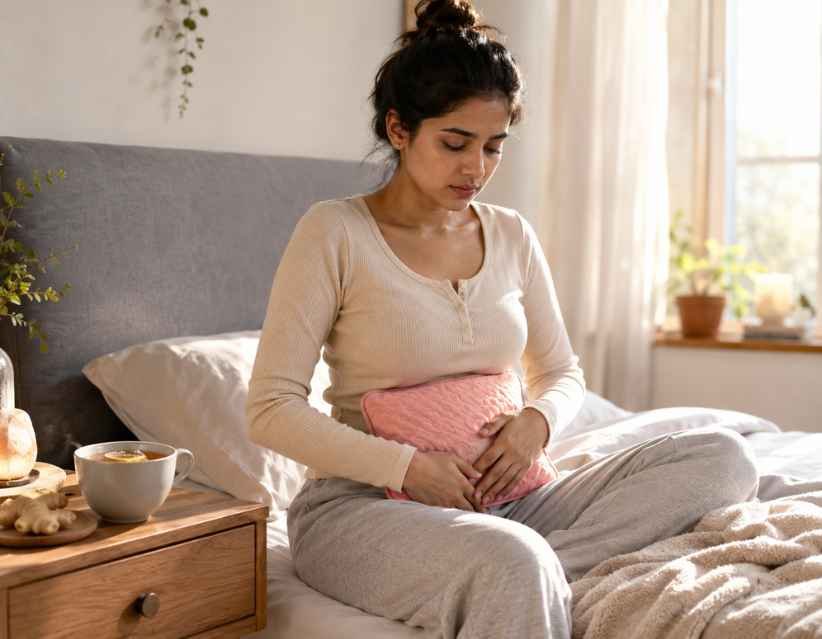
This is, hands down, the most effective thing I have tried. A heating pad or a simple hot water bottle pressed against your lower abdomen helps relax the uterine muscles and eases the contractions causing your pain. I keep a small electric heating pad next to my bed specifically for this. Fifteen to twenty minutes usually brings noticeable relief.
2. Try Gentle Stretching
I know stretching is the last thing you want to do when you are doubled over, but a few slow child's pose or cat-cow stretches genuinely loosen the tension in your lower back and pelvis. You do not need a full workout, just two or three minutes of easy movement.
3. Take a Warm Shower
A warm shower works almost like a full body version of the heating pad. The warmth relaxes your muscles, and honestly, it also just makes you feel human again on a rough day.
4. Stay Hydrated
Drinking enough water reduces bloating and can ease headaches that sometimes tag along with period pain. I try to sip warm water throughout the day instead of cold water, since cold drinks can sometimes make cramps feel worse.
5. Try a Warm Ginger Drink
Warm ginger tea is one of the more comforting home remedies, and I genuinely enjoy it on painful days. It will not work like medicine, but it may help you feel calmer and slightly less nauseous.
6. Massage Your Lower Abdomen
A gentle circular massage on your lower belly, sometimes with a bit of warm sesame or coconut oil, can help relax tight muscles. It is simple, free, and something you can do lying in bed.
7. Rest and Practice Slow Breathing
This one sounds too simple to matter, but slow, deep breathing genuinely helps your body relax and can lower how intense pain feels. Lie down, place a hand on your belly, and breathe slowly for a few minutes. Pair this with rest whenever your schedule allows it.
What Medicine Helps Period Pain Fast?
If home methods are not enough, an over-the-counter NSAID such as ibuprofen is one of the main treatments doctors recommend for menstrual cramps, since it directly works against the prostaglandins causing the pain. That said, please do not treat this as a blanket recommendation. Whether an NSAID is safe for you depends on your medical history, other conditions, and any medicines you already take, so check with a doctor or pharmacist before taking one, especially if you take it regularly every cycle. Never exceed the dose mentioned on the label, and avoid combining multiple pain relievers on your own.
What to Eat and Drink During Period Pain
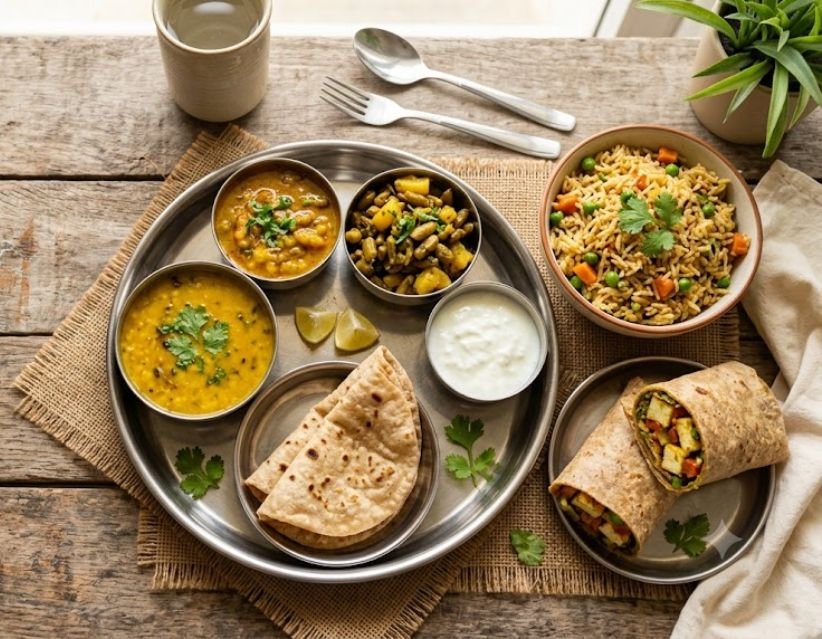
Since my whole family is vegetarian, I have had to figure out plant-based ways to support my body during periods, and honestly it has worked well for me.
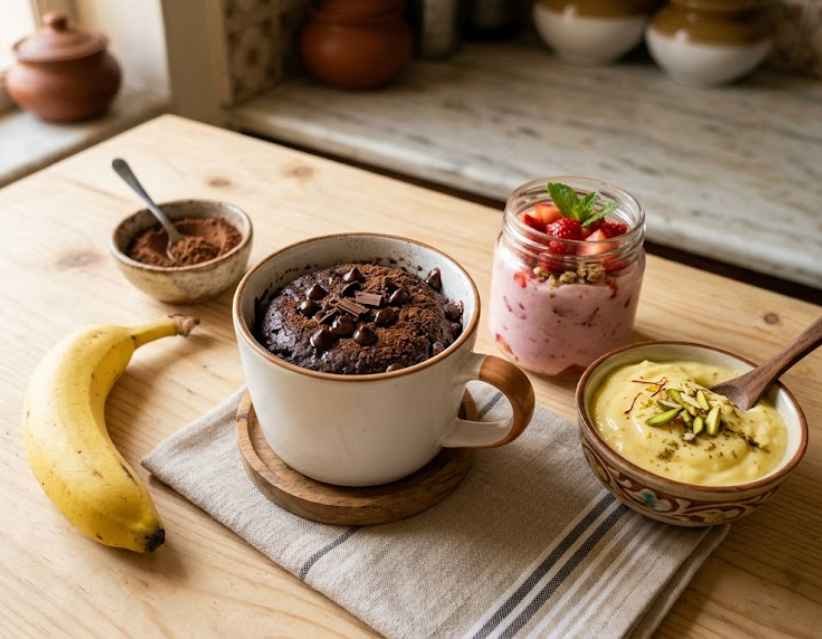
- Warm soups and dals for comfort and hydration
- Ginger tea or warm lemon water
- Leafy greens and lentils for iron, especially useful if your flow is heavy
- Bananas and nuts for a steady energy boost
- Plenty of water throughout the day
If you enjoy fruit, something as simple as strawberry benefits are worth knowing, since fruits rich in antioxidants can support you through your cycle too. I also try to stick to a balanced routine from my 7-day healthy eating plan even on period days, just adjusted to be gentler on my stomach. If you like a healthy plant-based snack option, peanut butter can genuinely be a smart choice during this time.
What Should You Avoid During Period Cramps?
A few things tend to make cramps feel worse, at least in my experience and according to general medical advice.
- Excess caffeine, which can increase tension and worsen cramping for some people
- Very salty or heavily processed foods, which can add to bloating
- Skipping meals, since low blood sugar can intensify fatigue and irritability
- Ignoring rest and pushing through intense physical activity when your body is clearly asking for a break
Getting proper rest matters more than people admit. If your sleep has been off lately, these healthy sleep habits can help you recover faster, and better sleep genuinely makes period pain more manageable the next day.
When Is Period Pain Too Severe?
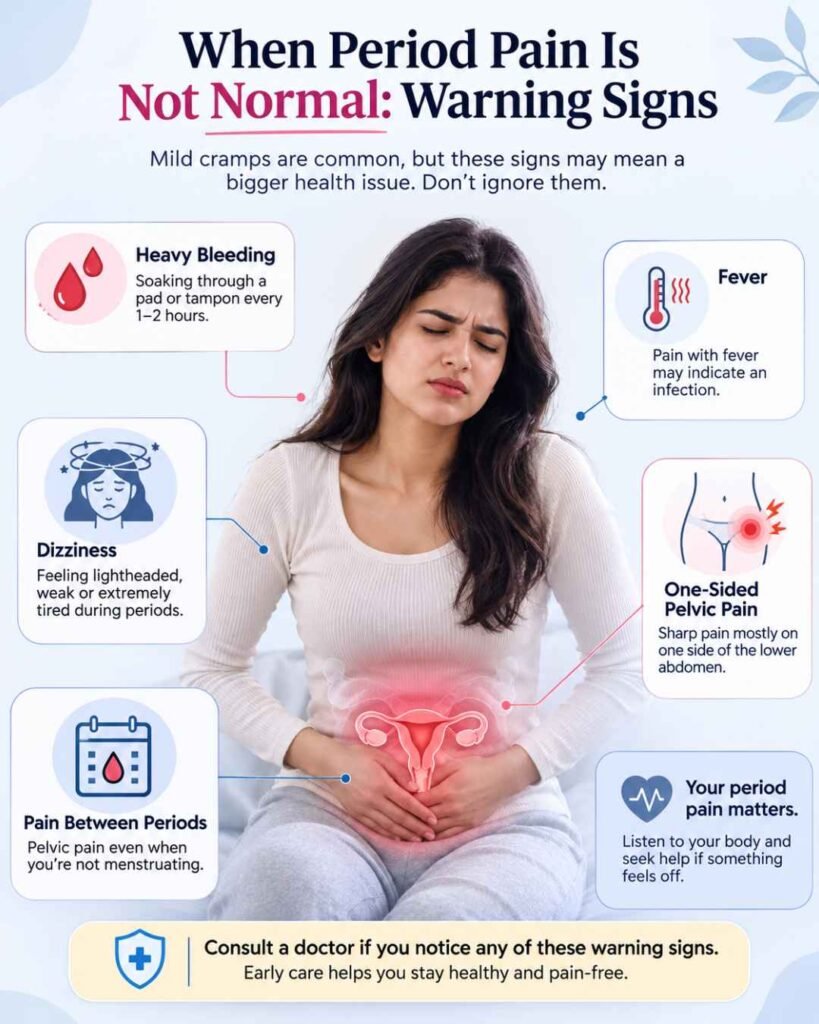
This is the part I wish someone had told me clearly years ago. Some cramping every month is common, but severe pain that keeps disrupting your life is not something you should simply accept.
Please talk to a doctor if you notice:
- Pain that keeps getting worse instead of easing with home care
- Pain severe enough to stop you from going about your normal day
- Unusually heavy bleeding, or soaking through a pad within an hour
- Fainting or severe dizziness
- Fever alongside your period pain
- Severe pain concentrated on one side of your pelvis
- Pain between periods, not just during them
- Pain during sex
- New, severe pain that started suddenly as an adult
These signs can sometimes point to underlying conditions such as endometriosis or fibroids, which need proper medical evaluation rather than more home remedies. There is nothing wrong with getting checked out. It is simply being responsible about your own health.
How to Prevent Severe Period Pain Next Month
While you cannot always avoid cramps entirely, a few habits genuinely reduce how intense they get over time.
- Stay consistent with light exercise through the month, not just during your period
- Keep your iron levels in check through a balanced vegetarian diet
- Manage stress, since high stress levels can worsen period pain for many people
- Track your cycle so you can prepare with heat packs, rest, and hydration a day or two before your period starts
- Get enough sleep consistently, not just when your period arrives
If digestive discomfort like loose motions ever tags along with your period, here is how to manage it quickly without adding more stress to an already uncomfortable day.
My Honest Take
Period pain is exhausting, and I understand the urge to search for something that promises instant relief. The truth is that a combination of heat, rest, hydration, gentle movement, and the right pain relief when necessary is what actually works for most people, not one single magic remedy. Be patient with your body, pay attention to what it is telling you, and do not hesitate to see a doctor if something feels off month after month.
For more health and wellness guides like this one, you can explore more at Mindful Hive.
FAQs About Period Pain
What is the fastest way to reduce period pain at home?
Heat applied to your lower abdomen is one of the simplest and fastest ways to ease cramps. Gentle movement, rest, hydration, and appropriate pain relief can help alongside it.
How can I get rid of period cramps fast?
Try a heating pad or hot water bottle, gentle stretching, slow breathing, and warm water. If it is medically suitable for you, an over-the-counter anti-inflammatory may also help.
What drink helps with period pain?
Warm drinks such as ginger tea are commonly used for comfort during periods. No drink guarantees instant relief, but warmth and hydration genuinely help you feel better.
Is severe period pain normal?
Some cramping is common, but pain that is severe enough to disrupt your daily life every month should not simply be accepted. It is worth getting checked by a doctor.
When should I see a doctor for period pain?
See a doctor if your pain is severe, keeps getting worse, interferes with normal activities, or comes with unusual bleeding, fever, fainting, or pain outside your period.
Two Quick Tips Before You Go
Tip 1: Start tracking when your cramps begin, how intense they feel, and what actually helps you. Patterns become obvious after two or three cycles.
Tip 2: If the same level of pain returns every single month despite consistent home care, bring it up with a gynaecologist instead of just managing around it forever.