

If you are searching for how to get rid of UTI at midnight because every trip to the washroom burns, I get it. That sharp, stinging feeling makes it hard to think about anything else. The honest answer is simple. A urinary tract infection caused by bacteria usually needs a proper diagnosis and often antibiotics prescribed by a doctor, while water, rest and a few comfort measures help you feel better along the way.
Read on at your own pace. I have kept it practical, and every step is something you can act on today. You can also browse more everyday health guides on Mindful Hive.
Quick Answer: How to Get Rid of UTI
To get rid of a UTI, see a healthcare professional for the right diagnosis and treatment. Bacterial UTIs often need prescription antibiotics. Drink enough water, do not hold urine, and seek urgent care for fever, vomiting, back pain, or blood in urine.
The short version in order:
- Get a urine test to confirm the infection.
- Take the prescribed antibiotics exactly as advised.
- Drink water steadily through the day.
- Use a warm compress or doctor-approved pain relief for comfort.
- Go back to the doctor if symptoms get worse or return.
How to Get Rid of UTI: Treatment, Home Relief and Daily Care
The Weekend My Friend Ignored Her UTI Symptoms
A few months ago, my friend Riya called me on a Sunday afternoon. She sounded tired and annoyed. For two days she had felt a burning while urinating, and she kept going to the washroom every twenty minutes with barely any urine to show for it.
Her plan was simple. She would drink a lot of water, have jeera water and buttermilk, and wait it out. By Monday evening the burning was worse, her lower stomach ached, and she felt feverish. She finally went to a clinic, did a urine test, and the report showed a bladder infection. Her doctor started a short course of antibiotics, and she felt noticeably better in about two days.
What stayed with me was what she said afterwards. "I wasted two days trying to be tough." That is the main reason I am writing this guide. Many of us in India search for urine infection or peshab mein jalan and try home tricks first, and that delay is exactly where a small problem turns into a big one.
What Is a UTI?
A UTI is the short form of urinary tract infection. It happens when bacteria enter the urinary tract, which includes the urethra, bladder, ureters and kidneys. Most infections stay in the lower part, the bladder, and doctors call this a bladder infection or cystitis.
The most common culprit is E. coli, a bacteria that normally lives in the gut. It is harmless there, but it causes trouble when it travels to the urinary opening and climbs upward.
Common UTI Symptoms You Should Not Ignore
Lower Urinary Tract Symptoms
These are the signs most people notice first:
- Burning while urinating, often described as a stinging feeling
- Frequent urination with only small amounts passing
- Strong urinary urgency, the feeling that you must go right now
- Lower abdominal pain or pressure above the pubic bone
- Cloudy urine or urine with a strong smell
Signs the Infection May Have Spread
Please treat these as a warning:
- Fever and chills
- Back or flank pain on one side
- Nausea or vomiting
- Blood in urine
- Feeling very weak or unwell
These can point toward a kidney infection, which needs prompt medical care.
What Causes a UTI?
Bacteria are the direct cause, but a few everyday habits and situations make it easier for them to settle in:
- Holding urine for long hours at work, college or during travel
- Drinking too little water, especially in hot weather
- Poor hygiene habits, such as wiping back to front
- Using public toilets without cleaning your hands properly
- Staying in wet clothes or tight synthetic underwear for long periods
- Sexual activity, which can move bacteria toward the urethra
- Diabetes, kidney stones or any condition that stops the bladder from emptying fully
In a country like ours, where summers are long and washroom access is not always comfortable, many people drink less water on purpose. That quietly raises the risk.
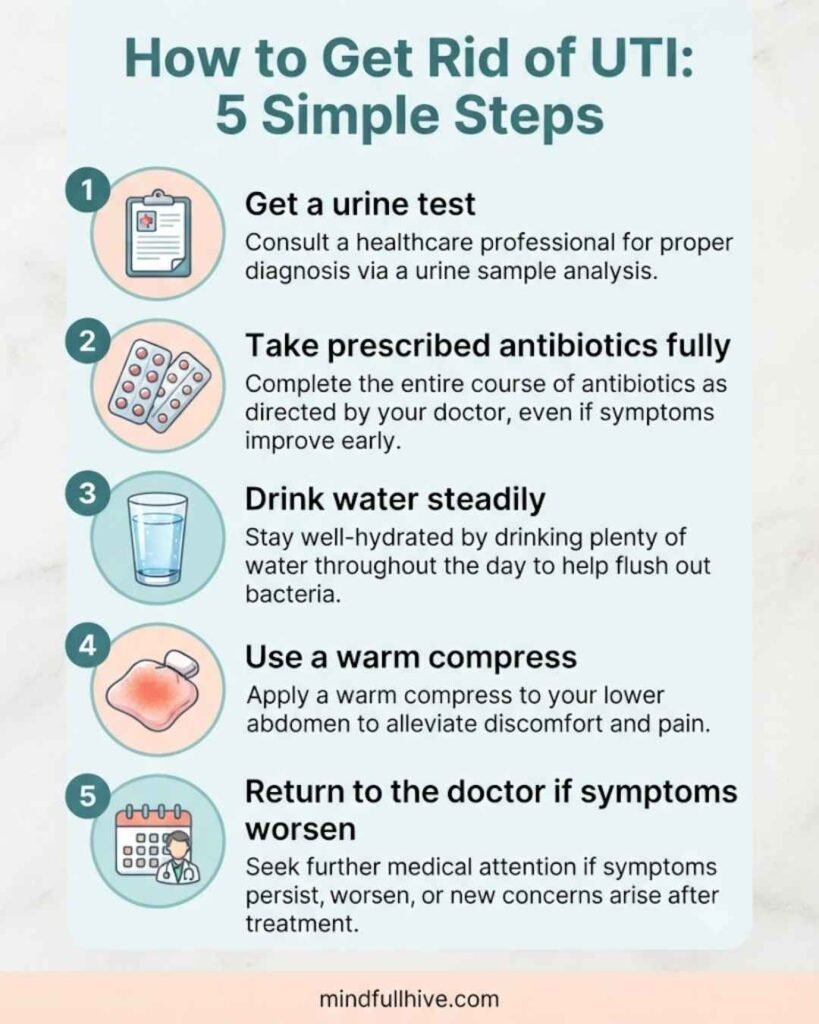
How to Get Rid of UTI in 5 Steps
This is the core of the article, and I have kept it as plain as possible.
Step 1: Get the Right Diagnosis
Burning while peeing is not always a UTI. Other conditions can feel similar, and the wrong guess leads to the wrong treatment. A doctor will usually ask about your symptoms and advise a urine test.
Step 2: Take Prescribed Treatment Correctly
For a confirmed bacterial infection, the doctor will usually prescribe antibiotics. The exact medicine depends on your health, allergies, other conditions and local antibiotic resistance patterns, so I am not listing names or doses here. Two rules matter a lot:
- Never use leftover antibiotics from an old illness
- Do not stop the course early just because you feel fine
If you stop early, the stronger bacteria can survive and come back, and this is a big reason antibiotics are becoming less effective across India.
Step 3: Drink Enough Fluids
Water will not replace treatment, but it helps. It keeps you hydrated, dilutes your urine so it stings less, and keeps you passing urine regularly. Sip steadily through the day instead of gulping a litre at once.
Step 4: Use Safe Measures for Pain Relief
A warm compress on the lower abdomen can ease cramping. A doctor or pharmacist can also suggest a safe pain relief option for you. Please avoid mixing random tablets from a friend's cabinet.
Step 5: Know When Home Care Is Not Enough
If you have no improvement in a day or two after starting treatment, or the symptoms get worse, call your doctor again. Do not wait it out.
How to Get Rid of UTI Fast: What Is Realistic?
Everyone wants speed, so here is the truth. With the right antibiotic, many people notice relief within one to three days. The infection still needs the full course to clear properly. There is no safe shortcut that clears a bacterial infection in one day, and any article promising one is selling something.
UTI Treatment at Home: A Vegetarian-Friendly Comfort Plan
Think of this as UTI relief at home that supports your treatment, not replaces it. Since our family is vegetarian, here is what actually fits our kitchen:
- Plain water and coconut water for hydration
- Thin buttermilk or fresh curd to keep the stomach comfortable while on antibiotics
- Light khichdi, moong dal soup or vegetable broth when you have little appetite
- Seasonal fruits like watermelon, cucumber and oranges for extra fluids
- Less tea, coffee, soft drinks and very spicy food while the bladder feels irritated
If you want a simple weekly structure to eat better afterwards, my 7-day healthy eating plan is a good place to start. It is meant for general wellness, not as a UTI treatment.
Rest matters too. When your body is fighting an infection, sleep is not a luxury, and my notes on better sleep habits may help you wind down properly.
A Note on Cranberry Juice, Jeera Water and Alkaline Remedies
Cranberry products may help some people lower the chance of repeat infections, but they are not a treatment for an active UTI. Jeera water, baking soda water and "alkaline" foods are popular in family WhatsApp groups, but none of them can clear a bacterial infection. They might feel soothing, and that is all.
How Doctors Test for a UTI
Knowing what to expect makes the clinic visit less stressful.
Urine Routine and Urinalysis
A basic urine test or urinalysis looks for signs of infection in a small sample. Your report may mention pus cells in urine, which suggest inflammation. A high count does not automatically mean you need antibiotics, and I explained this in detail in my guide on pus cells in urine.
Urine Culture
A urine culture grows the bacteria in a lab to identify which one is causing the problem and which antibiotic works against it. Doctors often ask for it when symptoms are severe, keep returning, or do not improve with the first medicine. The result takes around two days, but it makes treatment much more accurate.
Why This Matters in India
Indian health research bodies like ICMR have pointed out that resistance to common antibiotics is rising. Starting medicines without a culture report, especially for repeat infections, adds to that problem. A little patience for a proper test protects you and everyone else.
When to See a Doctor and How to Prevent Another UTI
When a UTI Needs Urgent Medical Care
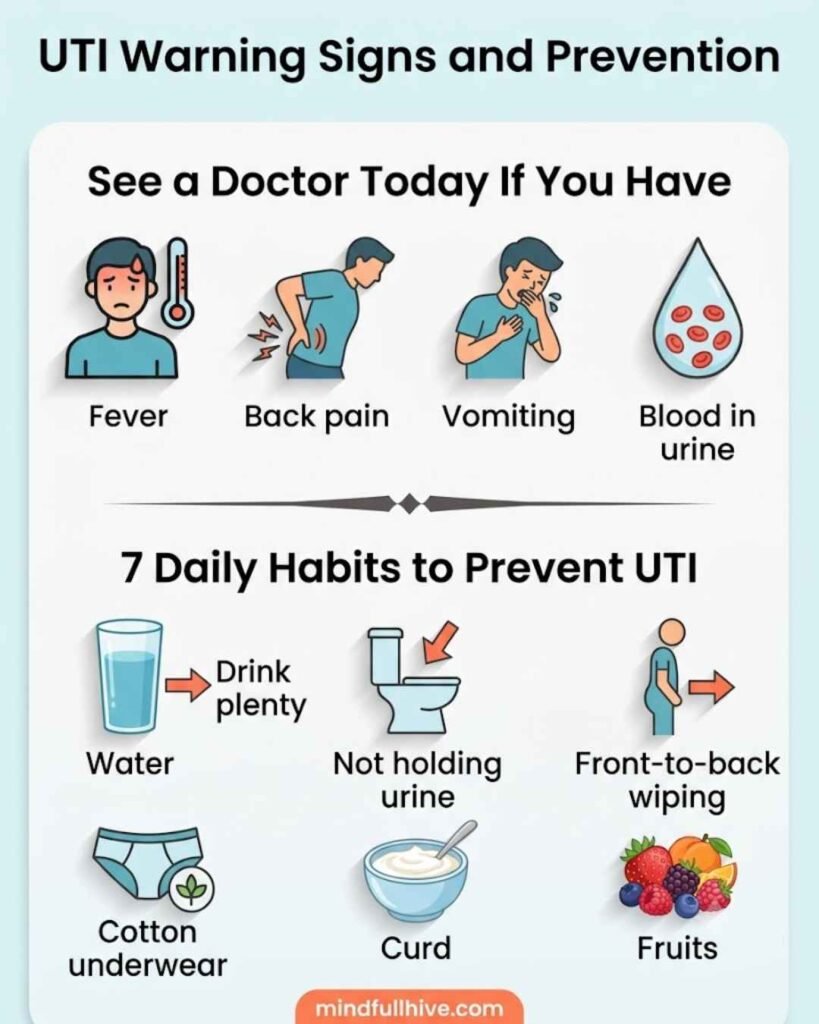
Go to a doctor the same day, or to an emergency room, if you notice any of these:
- Fever above 100.4°F (38°C) or shaking chills
- Vomiting that stops you from keeping fluids or tablets down
- Back or flank pain
- Blood in urine
- Confusion or extreme weakness, especially in older adults
- Urinary symptoms during pregnancy
Untreated infection can reach the kidneys, and a kidney infection can become serious quickly.
UTI in Women, Men, Pregnancy and Recurrent Cases
Women
Women get UTIs more often because the urethra is shorter, which gives bacteria a shorter path to the bladder.
Men
UTIs are less common in men, so a man with these symptoms should always see a doctor to check for an underlying cause such as a prostate problem or stones.
Pregnancy
Even mild symptoms need medical attention during pregnancy, because untreated infection can affect both the mother and the baby. Never self-medicate in this situation.
Recurrent UTI
If you get three or more infections in a year, your doctor may look for a hidden cause and suggest a prevention plan. A recurrent UTI is not something to just keep treating on your own.
How to Reduce Your Risk of Another UTI
After watching Riya recover, we made a small list of habits that are easy to follow:
- Drink water regularly, aiming for pale yellow urine through the day
- Pee when you feel the urge, and do not hold it for hours
- Empty your bladder after intimacy
- Wipe from front to back
- Wear breathable cotton underwear and change out of wet clothes quickly
- Keep sugar levels in check if you have diabetes
- Include fruits, vegetables, curd and whole grains in your meals, like the ones in my strawberry benefits guide for a fresh fruit idea
None of these is dramatic, and that is the point. Small, boring habits do most of the protecting.
Quick Poll: What Did You Do First?
Be honest, because nobody is judging. When you had your last urine infection, what did you try first?
- A. Drank loads of water and waited
- B. Tried a home remedy like jeera water or cranberry juice
- C. Went straight to a doctor
- D. Took an old antibiotic
If you picked D, please skip that next time. Tell me your answer in the comments, because your experience may help another reader decide faster.
FAQs About How to Get Rid of UTI
1. Can a UTI go away on its own?
Some mild symptoms may settle, but you should not assume a bacterial UTI has cleared because you feel better for a day. Get medical advice, especially if symptoms are strong or keep returning.
2. What is the fastest way to get rid of a UTI?
The fastest safe route is a quick diagnosis followed by the antibiotic your doctor chooses. Water and a warm compress make you more comfortable while it works.
3. Can I treat a UTI at home?
Home care can support comfort, but it cannot reliably clear a bacterial infection. If you think you have a UTI, speak to a healthcare professional.
4. Can drinking water flush out a UTI?
Water helps you stay hydrated and may help move bacteria out of the urinary tract. It is not a guaranteed cure on its own.
5. When should I worry about a UTI?
Worry when you have fever, chills, vomiting, back or side pain, blood in urine, or any urinary symptoms during pregnancy. These need prompt assessment.
2 Quick Tips to Remember
Quick Tip 1
Never take leftover antibiotics from an older infection.
Quick Tip 2
Do not stop a prescribed antibiotic early unless your healthcare professional tells you to.
Final Thoughts on How to Get Rid of UTI
Riya is fine now, and she carries a water bottle everywhere. Her story is the reason I keep repeating one idea in this guide. The best way to get rid of UTI is to act early, confirm it with a urine test, follow the antibiotics your doctor prescribes, and support your body with water, rest and simple home-cooked vegetarian food.
If your symptoms are mild, start with a doctor visit instead of a guessing game. If they are severe, go today. Share this with a friend who tends to wait things out, and visit Mindful Hive for more practical health reads.
Sources to list: NIDDK, NHS, ICMR antimicrobial resistance guidance, ACOG.
This article is for general information and does not replace professional medical advice, diagnosis or treatment.