


Last monsoon, I woke up with one eye stuck half shut and a burning feeling that would not go away no matter how much I blinked. By evening, both eyes were red, watery and swollen, and a friend at work said the same thing had been going around the office for a week. That is when I first heard the term eye flu, and within a day I understood exactly why everyone dreads it.
If your eyes are suddenly red, itchy, watery or gritty, you are probably searching for the same answers I was looking for back then. This blog covers what eye flu actually is, why it spreads so fast, how to treat it safely, what to avoid, and when it is time to stop relying on home remedies and see a doctor.
What Is Eye Flu?
Eye flu is the common name people use for conjunctivitis, an inflammation of the thin, clear membrane called the conjunctiva that covers the white part of your eye and the inside of your eyelids. When this membrane gets irritated or infected, it swells up and turns red, which is why the condition is often nicknamed pink eye.
Here is the part most articles skip: eye flu is not always the same illness. It can be caused by a virus, bacteria, allergens or an irritant, and each type behaves a little differently. Treating all of them the same way is one of the biggest mistakes people make.
Eye Flu vs Conjunctivitis: Are They the Same?
Yes, in everyday language they mean the same thing. Doctors use the word conjunctivitis, while most patients simply say eye flu because it spreads through communities the way seasonal flu does, especially during monsoon and humid weather. Knowing this connection helps you understand why the condition is so contagious and why prevention matters just as much as treatment.
Eye Flu Symptoms You Should Not Ignore
The symptoms usually show up quickly, sometimes within a day of exposure. In my case, the first sign was a strange grittiness, almost like sand was stuck under my eyelid.
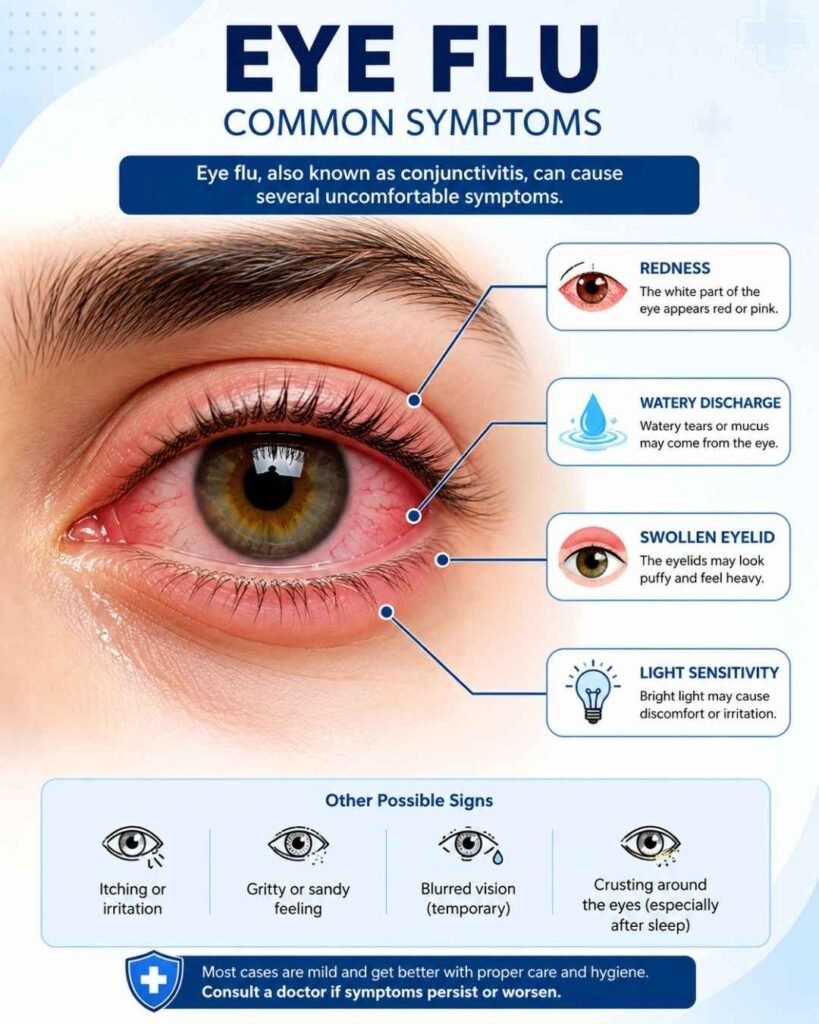
Common eye flu symptoms include:
- Redness or a pink tint in the white part of the eye
- Watery eyes or constant tearing
- Itching or a burning sensation
- Swollen eyelids
- Discharge that may be watery or thick
- Crusting around the eyelashes, especially after waking up
- Mild sensitivity to light
- Temporary blurred vision that clears after blinking or wiping discharge
How Symptoms Differ By Type
Not every case of eye flu looks the same, and the symptoms often hint at the underlying cause.
- Viral conjunctivitis usually brings watery discharge, redness and irritation, often starting in one eye before moving to the other.
- Bacterial conjunctivitis tends to produce thicker, yellow or greenish discharge, and eyelids may stick together after sleep.
- Allergic conjunctivitis is marked by strong itching in both eyes, often paired with sneezing or a stuffy nose.
Recognising which pattern matches your symptoms can help you decide the right next step, though a proper diagnosis should always come from an eye doctor.
What Causes Eye Flu?
Understanding the cause behind your eye flu changes everything about how you treat it.
- Viral causes: Most cases are linked to viruses, commonly adenovirus, which spreads easily through coughing, sneezing or touching contaminated surfaces.
- Bacterial causes: Bacterial infections can also trigger conjunctivitis and sometimes need targeted treatment from a doctor.
- Allergic causes: Pollen, dust and pet dander are frequent triggers, especially for people who already deal with seasonal allergies.
- Irritant causes: Smoke, chlorine, dust and certain chemicals can inflame the eyes without any infection being involved at all.
Eye Flu Treatment Options
Once I understood that my case was viral, it made the whole recovery process easier because I stopped expecting antibiotic drops to fix things overnight.
Viral Conjunctivitis Treatment
Viral eye flu is usually self-limiting, meaning it clears up on its own as your immune system fights it off. Supportive care such as a cold compress, artificial tears and rest for your eyes is generally what doctors recommend, since antibiotics do not work against viruses.
Bacterial Conjunctivitis Treatment
If a doctor confirms a bacterial cause, antibiotic eye drops or ointment may be prescribed. This is why self-diagnosing and buying random eye drops from a pharmacy is not the safest approach.
Allergic Conjunctivitis Treatment
For allergy-driven eye flu, avoiding the trigger is the first step, followed by antihistamine eye drops or oral allergy medication if a doctor recommends them.
Eye Flu Treatment at Home
Home care played the biggest role in my own recovery, and it is what most people search for the moment their eyes start acting up.
What Actually Helped Me
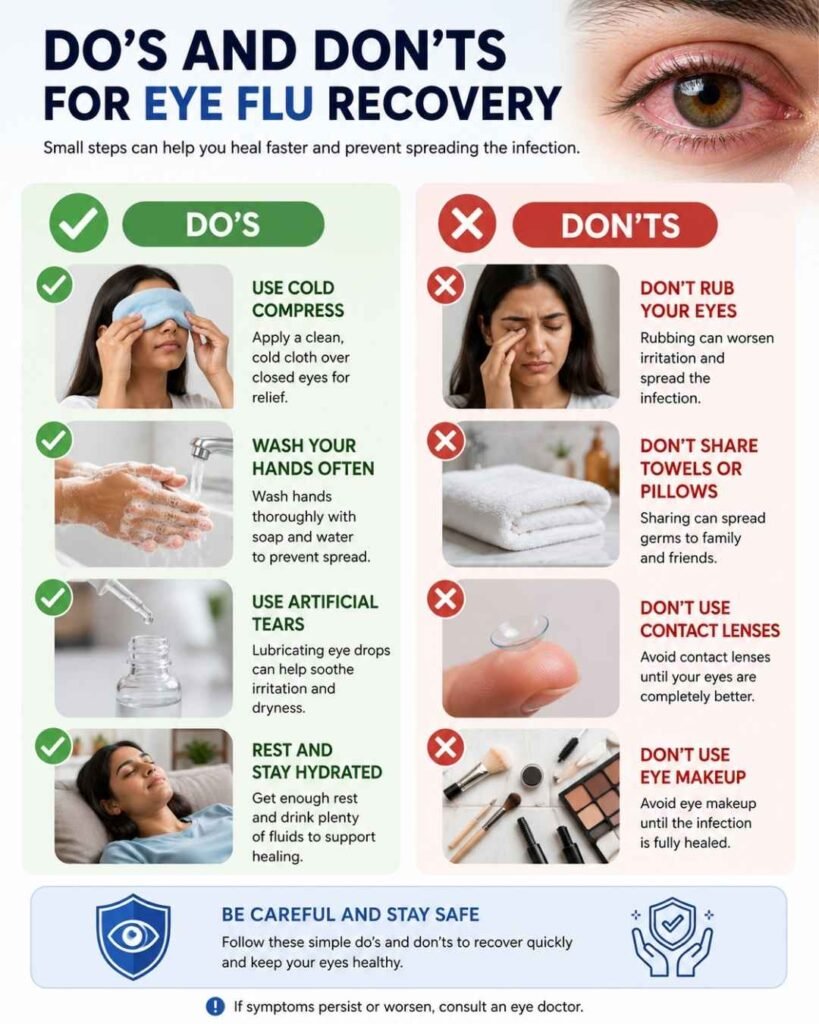
- Applying a clean, cold compress over closed eyelids for a few minutes at a time
- Using artificial tears to ease dryness and irritation
- Washing my hands frequently, especially before and after touching my face
- Using a fresh, separate towel just for my face
- Gently wiping discharge with a clean, damp cloth instead of rubbing
- Giving my eyes extra rest by cutting down screen time
What NOT to Do During Eye Flu
Some habits can make eye flu worse or help it spread to others, so it is worth being extra careful.
- Do not rub your eyes, even when the itching feels unbearable
- Do not share towels, pillowcases or handkerchiefs with anyone at home
- Do not share or reuse eye makeup during an active infection
- Do not wear contact lenses until your symptoms have fully cleared
- Do not use leftover prescription eye drops from a previous infection
- Do not assume antibiotic drops are needed for every case of eye flu
How Long Does Eye Flu Last?
This was the first question I typed into Google, and the honest answer is that it depends on the cause. Uncomplicated viral conjunctivitis commonly improves within seven to fourteen days, though some cases can stretch to two or three weeks. Bacterial conjunctivitis may resolve faster once appropriate treatment begins, while allergic conjunctivitis can flare up again if you are repeatedly exposed to the trigger.
Is Eye Flu Contagious?
Extremely, and this is exactly why it spreads through offices, schools and families so quickly. Viral and bacterial eye flu can pass from person to person through:
- Direct contact with infected eye secretions
- Touching your eyes after touching a contaminated surface
- Sharing towels, pillows or handkerchiefs
- Sharing eye makeup or applicators
- Close contact with someone who is already infected
At home, my family stayed cautious with separate towels and constant handwashing, and thankfully nobody else caught it from me.
How to Prevent Eye Flu
Prevention is simpler than treatment, and a few consistent habits go a long way.
- Wash your hands often, especially during flu season
- Avoid touching your eyes unnecessarily
- Do not share towels, cosmetics or handkerchiefs with others
- Clean frequently touched surfaces like door handles and phone screens
- Skip contact lenses if your eyes feel irritated
- Wash pillowcases and towels regularly, particularly if someone at home is infected
A little extra care with hygiene during monsoon or flu outbreaks can genuinely keep eye flu away from your household.
When Should You See a Doctor?
Home care works for most mild cases, but certain symptoms mean it is time to stop waiting and book an appointment.
See a doctor promptly if you notice:
- Significant eye pain, not just mild irritation
- Strong sensitivity to light
- Vision changes that do not clear after wiping away discharge
- Intense redness that keeps worsening
- Symptoms that persist beyond two to three weeks
- Any eye symptoms while wearing contact lenses
I want to be clear that this blog is meant to help you understand what eye flu generally involves, not to replace a proper eye examination. If anything feels unusual or severe, please consult an ophthalmologist rather than waiting it out.
Supporting Your Body While You Recover
Eye flu can leave you feeling tired, and giving your body proper rest genuinely speeds things up. Prioritising sleep instead of staying up late browsing on your phone made a real difference for me, and if you struggle with rest, this piece on how to sleep 8 hours in 4 hours has some practical ideas worth trying.
Eating well also supports your immune system while you fight off any infection. Since my family is vegetarian, I leaned on simple, plant-based meals rich in vitamins during my recovery, and this 7-day healthy eating plan is a good place to start if you want structure without overthinking every meal. Fruits like strawberries are also a nice, refreshing addition, and you can read more about their benefits in this piece on strawberry benefits.
If a cough or cold tags along with your eye flu, which happens fairly often during monsoon season, this guide on cough syrups for adults can help you understand your options before speaking with a pharmacist or doctor.
Staying patient during recovery matters too. I found it helpful to slow down and focus on small, consistent habits rather than rushing my body back to normal, an idea that lines up nicely with the mindset shared in The 7 Habits of Highly Effective People. And if you are someone who snacks while resting at home, it is worth knowing whether your choices support your goals, which this article on peanut butter and weight loss explains well. For anyone curious about natural remedies in general, this piece on batana oil benefits is an interesting read for a different day.
At Mindful Hive, the goal is always to share practical, everyday health information in language that actually makes sense, and this eye flu guide follows that same approach.
FAQs About Eye Flu
1. What is eye flu?
Eye flu is the common term for conjunctivitis, especially the viral type, which causes red eyes, watering, irritation and discharge.
2. How long does eye flu last?
Most viral cases improve within seven to fourteen days, though some can take longer depending on the cause.
3. Is eye flu contagious?
Yes. Viral and bacterial conjunctivitis spread easily through contact with infected secretions, hands and shared items.
4. Can eye flu be treated at home?
Mild cases often respond well to supportive care like cold compresses and artificial tears, but some situations need medical evaluation.
5. Should I use antibiotic eye drops for eye flu?
Not automatically. Antibiotics only help bacterial infections, not viral ones, so a doctor should confirm the cause first.
Quick Tips
Quick Tip 1: Avoid rubbing your eyes, since it increases irritation and can spread the infection to your other eye or to people around you.
Quick Tip 2: Stop wearing contact lenses the moment symptoms appear, and only resume once your eyes have fully healed or your doctor gives the go-ahead.
Final Thoughts
Eye flu can feel alarming the first time it happens, but understanding what is actually going on behind the redness makes the whole experience far less stressful. Identify whether your case leans viral, bacterial or allergic, stick to gentle home care, practice good hygiene to protect the people around you, and do not hesitate to see a doctor if anything feels off. My own case cleared up within about ten days once I stopped panicking and started following these basics consistently, and I hope this guide helps you get through it just as smoothly.