
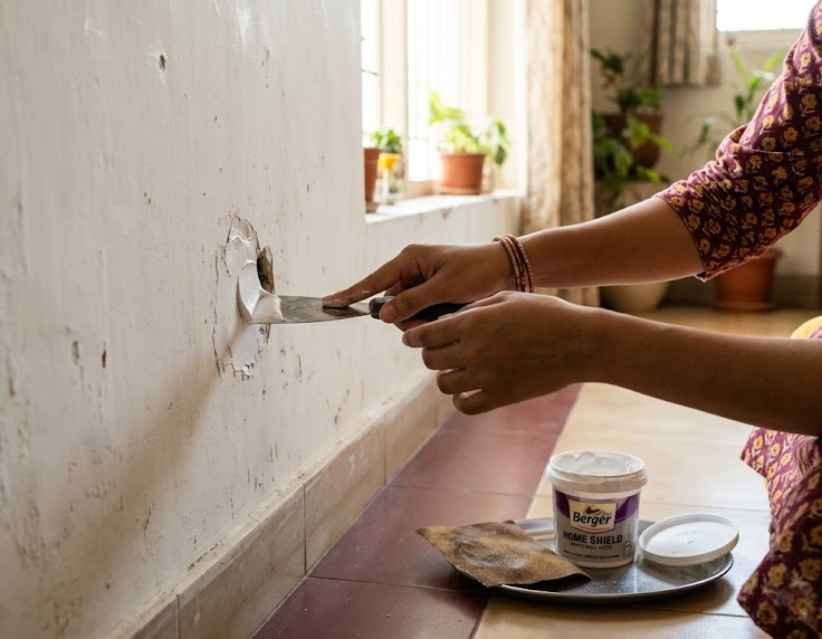
The first hole I ever made in a wall was not even my fault. My landlord asked me to hang a calendar before Diwali, and the nail went in at the wrong angle and left a small crack around it. I panicked a little, because I did not want to lose my deposit over one tiny mistake. That evening I sat with my laptop, searched everything I could find on how to patch a hole in wall, and slowly figured out that it is not as scary as it looks. A little wall putty, a putty knife and some patience were all I needed.
If you are staring at a nail hole, a drill mark from a curtain rod, or the gap left behind after removing an AC pipe, this guide will walk you through it the same simple way I learned it. No fancy tools, no contractor visit, just a weekend afternoon and a bit of care.
How to Patch a Hole in Wall the Quick Way
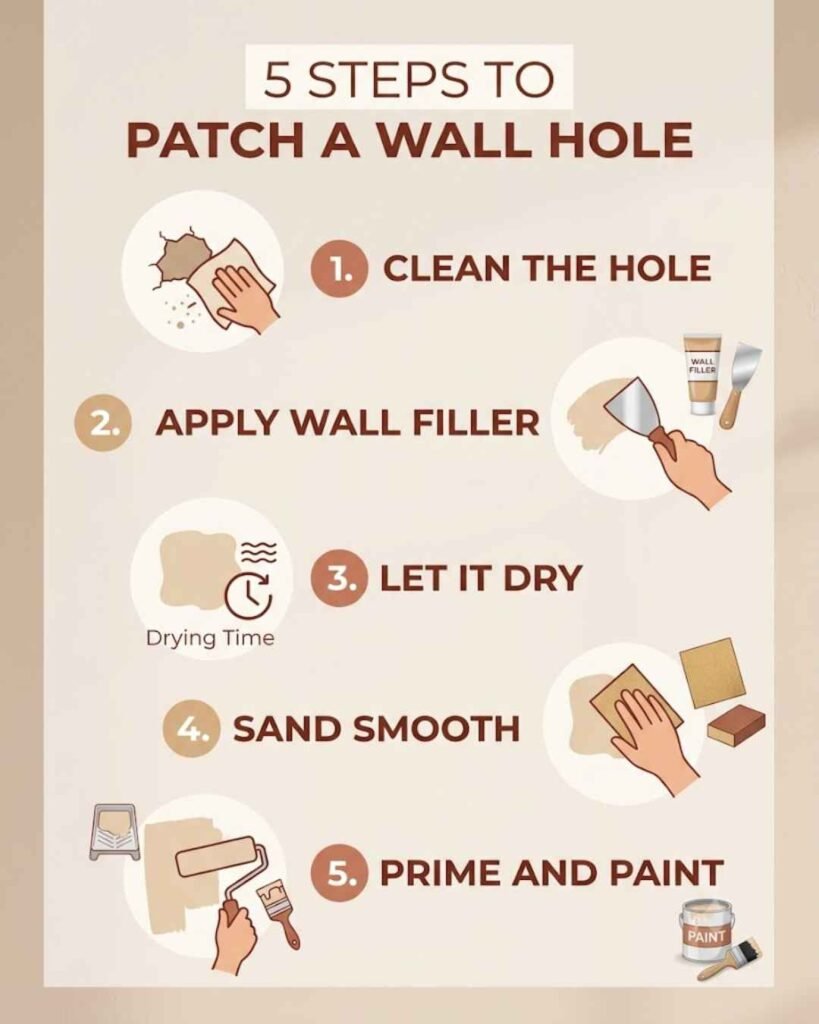
If you only have five minutes, here is the short version of how to patch a hole in wall:
- Clean out loose dust and broken plaster from the hole.
- Fill it with wall putty or wall filler using a putty knife.
- Let it dry fully, following the time given on the product.
- Sand the patch until it feels flush with the wall.
- Apply primer if needed, then finish with matching paint.
That covers small holes. Larger or deeper damage needs a bit more support, which we will get into further down. Keep this list in mind as your base, because every section below builds on it.
What You Need to Patch a Hole in the Wall
Before you start learning how to patch a hole in wall properly, gather your materials first. Most of these are easy to find at a local hardware shop or paint store, and none of them are expensive.
Wall Putty or Wall Filler
This is the star of the job. Wall putty works well on plastered walls, which is what most Indian homes have, while a ready-made wall filler or repair paste is handy for quick, small patches.
Putty Knife
A putty knife helps you press the filler into the hole and scrape off the extra so the surface stays level. A flexible plastic scraper does the job too if you do not have a metal one.
Sandpaper
Fine grit sandpaper smooths the dried patch so it blends with the rest of the wall instead of standing out as a bump.
Primer and Matching Paint
Primer helps the new patch absorb paint evenly, especially since dried filler often soaks up color differently than the old paint around it. Keep a small tin of matching paint handy for touch ups.
First, Identify What Caused the Hole
Not every hole needs the same fix. Before you dive into repairing anything, take a minute to look closely at the damage.
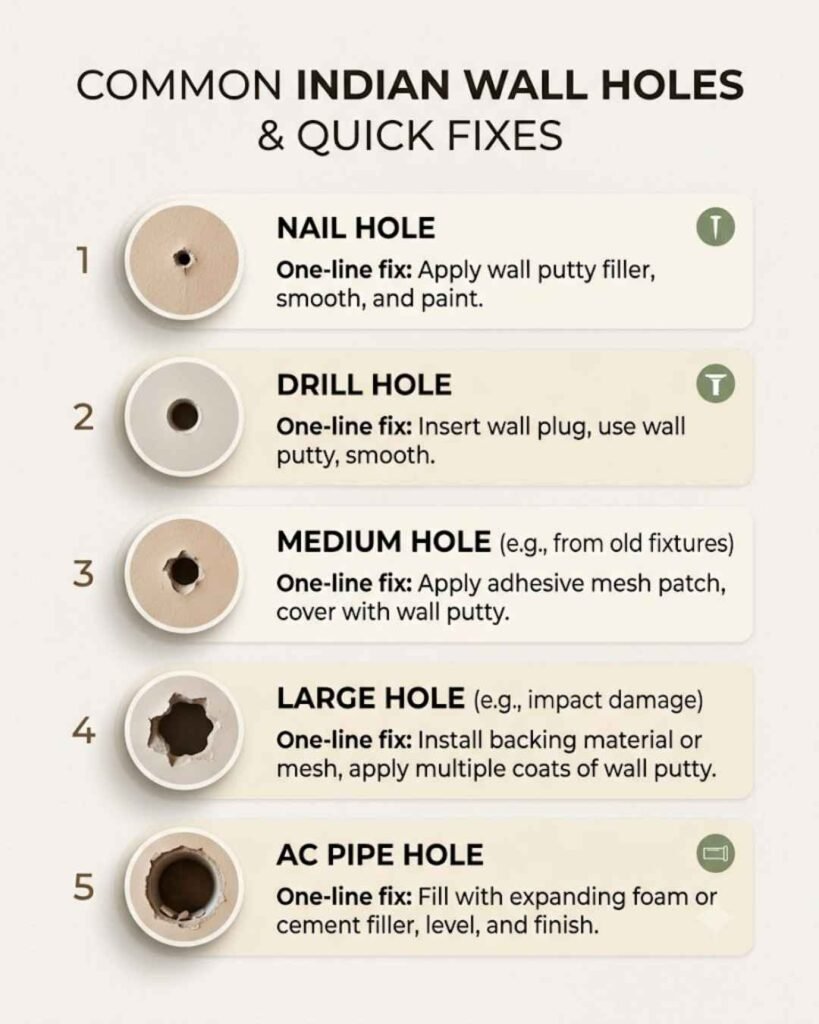
Nail or Screw Hole
These are the smallest and easiest to deal with, usually left behind from a photo frame or a hook.
Drill Hole
Common after removing a shelf bracket or a curtain rod. Slightly bigger than a nail hole, but still simple to close.
Medium Wall Damage
This could be from a doorknob hitting the wall repeatedly or an accidental knock with furniture.
Large or Deep Hole
Usually caused by heavier impact or old plumbing and wiring work. This kind needs backing support before filling.
AC Pipe Hole
Left behind when an air conditioner or its pipe is removed. It is wide, and often goes right through the wall, so it needs its own approach.
How to Fix a Small Hole in the Wall
Small nail and screw holes are the easiest place to start if you are new to this.
Step 1: Clean the Area
Wipe away loose dust with a dry cloth. If there is a bit of loose plaster hanging around the edges, gently press it back or remove it so you are working with a clean opening.
Step 2: Apply the Filler
Scoop a small amount of wall filler onto your putty knife and press it into the hole. Push firmly so there are no air gaps, then scrape off the excess so the surface sits level with the wall.
Step 3: Let It Dry
Give it the drying time mentioned on the packaging, usually a few hours. Rushing this step is one of the most common reasons a patch looks uneven later.
Step 4: Sand and Touch Up
Once dry, sand lightly until smooth, wipe away the dust, and add primer and matching paint if the patch stands out.
How to Fix Drill Holes in a Wall
Drill holes are only a little more work than nail holes, but the same how to patch a hole in wall approach still applies here.
Start by clearing out any leftover plastic wall plugs or debris from inside the hole. A drill hole often has loose material stuck deep inside, so use a thin tool or the tip of a screwdriver to clear it out before filling.
Once it is clean and empty, fill it the same way as a small hole. Press the putty in firmly, since drill holes are deeper and can leave a hollow pocket if you rush the job. You may need to apply the filler in two thin layers rather than one thick layer, letting each layer dry before adding the next. This keeps the patch from cracking as it sets.
Finish with sanding, primer where required, and matching paint.
How to Patch a Medium or Large Hole in the Wall
Bigger holes need a bit of backing before you fill them, otherwise the filler has nothing to hold onto and can crumble out later.
For a medium sized hole, a small mesh patch placed over the opening gives the filler something to grip. Press the mesh flat against the wall, then apply the filler over it in layers, letting each layer dry before adding the next.
For a genuinely large or deep hole, you may need a backing board or a stronger patch material behind the mesh before filling, especially on a cement wall or thicker masonry surface. Build the repair up gradually rather than trying to fill it in one go. Each layer should be thinner than the last as you approach the surface level, which gives you a smoother, more even finish.
Once the repair is fully dry and solid, sand it down, prime it, and paint to match the wall.
How to Sand, Prime and Paint the Repaired Wall
This is the finishing stage that makes or breaks how the patch looks. Paint should never be treated as the filling material itself. It is only the top layer that hides the repair underneath.
Sand the dried patch using fine grit sandpaper, moving in gentle circular motions until it feels level with your fingers, not just your eyes. Wipe away the dust with a slightly damp cloth and let the wall dry completely.
Apply a thin coat of primer over the patch if the filler has soaked up moisture unevenly, since this helps the paint sit consistently. Once the primer is dry, use matching paint and blend the edges outward so the repair does not sit as a visible patch. For older walls where the surrounding paint has faded, repainting a slightly larger section around the patch, rather than just the exact spot, usually gives a more even result.
How to Patch an AC Hole in a Wall
AC holes are wider and often go straight through the wall, so they deserve their own method.
Clear out any leftover pipe insulation, cement chips or dust from inside the opening. If the hole is very wide, use a mesh patch or a small board to close most of the gap first, leaving room for the final filler layer.
Apply a cement based filler or repair paste in stages, letting each layer set before adding the next, especially since these holes tend to be deeper than a standard drill hole. Once it is fully filled and dry, sand it smooth, and finish with primer and matching paint just like the other repairs above.
If the AC hole runs all the way through an exterior wall, keep an eye out for any signs of water entering from outside, since that changes how you should approach sealing it.
Common Mistakes When Patching a Wall Hole
A few small errors can undo an otherwise decent repair job, so it helps to know what to avoid.
- Skipping the cleaning step and filling over loose dust or crumbling plaster
- Applying one thick layer instead of a few thin ones on deeper holes
- Sanding before the filler has fully dried
- Painting over the patch without primer, which can leave a visible shade difference
- Ignoring a recurring hole in the same spot without checking the cause
Avoiding these mistakes is honestly half the work of how to patch a hole in wall the right way.
When Should You Call a Professional?
DIY repair works well for most everyday holes, but a few situations need proper attention from someone qualified.
Call a professional if you notice a wide structural crack that keeps reappearing, ongoing dampness or water seepage near the hole, exposed wiring or plumbing inside the opening, or visible damage around a beam, column or load bearing wall. These are not surface issues, and filling over them without fixing the underlying cause usually means the problem returns within a few months.
FAQs
Can I use wall putty to fill a hole in the wall?
Yes, wall putty or a suitable repair filler works well for small, shallow holes. Deeper or larger holes may need mesh backing or a different repair material before the final layer of putty goes on.
How do I fill a drill hole in a wall?
Clean out any loose material first, then press filler or wall putty firmly into the hole, smooth the surface, let it dry, sand it flush and finish with primer and matching paint.
Can I patch a wall hole without repainting the whole wall?
For a small, fresh patch, matching touch up paint is often enough. If the surrounding paint has faded or aged, repainting a slightly wider section usually blends better than a single spot.
How do I fix a large hole in a plaster wall?
Large holes usually need mesh or backing support before the repair material goes in. The right approach depends on the depth, the wall type and how wide the damage is.
Can I use cement to fill a wall hole?
Cement based filler suits certain masonry repairs, particularly wider holes like AC openings, but it should match the wall material and the size of the damage rather than being used for every type of hole.
Two Quick Tips Before You Start
Tip one: For deeper holes, apply filler in thin layers instead of one thick blob. Thin layers dry evenly and are far less likely to crack later.
Tip two: Always clear away dust before filling. A clean, dry surface helps the repair material stick properly and last longer.
More Home and Lifestyle Reads from Mindful Hive
If fixing up your space got you in a productive mood, a few more guides on the site might be worth a look. You can check the 7 Habits of Highly Effective People if you want to carry that same focus into other parts of your day, or browse the 7 Day Healthy Eating Plan and Strawberry Benefits for something on the kitchen side. There is also a piece on Batana Oil Benefits, a guide on How to Sleep 8 Hours in 4 Hours, a look at whether Peanut Butter Is Good for Weight Loss, and the Top 10 Cough Syrups for Adults if you need that too. You will find all of these, along with more home and lifestyle ideas, on Mindful Hive.
Final Thoughts
Patching a wall does not need a contractor or a big budget. Once you understand how to patch a hole in wall based on its size, whether it is a tiny nail mark or a wider AC opening, the process is mostly about patience and doing each step in order. Clean, fill, dry, sand, then finish with primer and paint. That sequence works for almost every hole you will come across in a normal home.
The next time you spot a stray nail hole or a gap left behind from moving furniture, you will not need to search for help again. You will already know exactly what to do.