
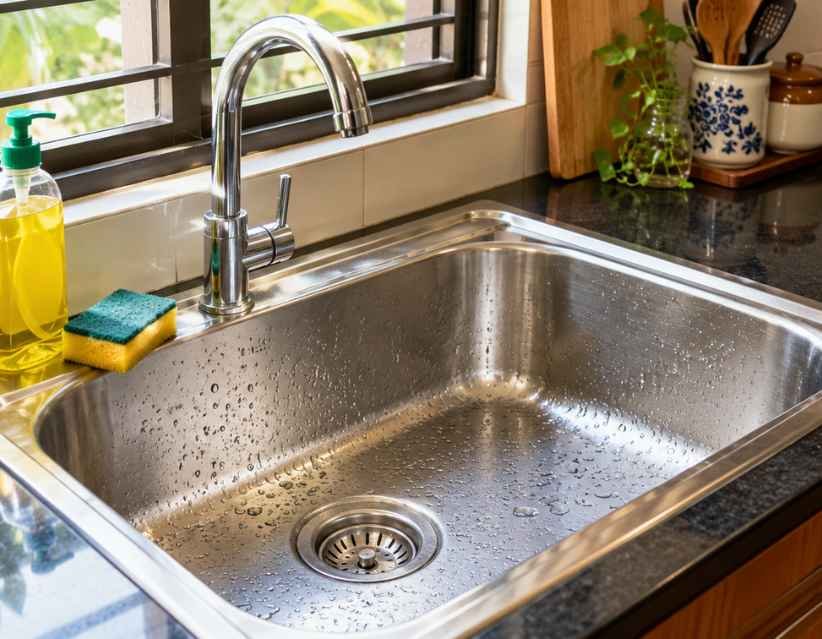
My kitchen sink used to be the one corner of my home I quietly avoided looking at. Between cooking three vegetarian meals a day, washing vegetables, rinsing lentils, and stacking dishes after dinner, the sink took a beating every single day. One evening, after noticing a dull white film around the tap and a faint smell near the drain, I finally sat down and figured out how to clean kitchen sink the right way instead of just scrubbing randomly with whatever was under the counter. This guide is everything I learned along the way, tested in my own kitchen, written the way I would explain it to a friend over chai.
Quick Answer: How to Clean a Kitchen Sink
If you only have two minutes, here is the short version. Remove leftover food scraps, rinse the basin with water, apply a little dish soap, and scrub gently with a soft sponge. For stubborn marks, sprinkle baking soda over the spot before scrubbing. Rinse everything thoroughly, give the drain a quick clean, and wipe the sink dry with a microfiber cloth to prevent water spots and mineral buildup.
That is the core routine. Now let us go deeper, because a kitchen sink in an Indian home deals with a lot more than the average cleaning article assumes: hard water, turmeric stains, oily dals, and a drain that clogs faster than you would like.
What You Need Before You Start Cleaning Your Kitchen Sink
Before jumping into kitchen sink cleaning, keep these simple items ready. None of these are expensive or hard to find.
- Mild dish soap
- Baking soda
- White vinegar
- A soft sponge
- A microfiber cloth
- An old toothbrush or soft-bristled brush for corners
- Rubber gloves
- Plain clean water
I keep a small box under my sink with just these items, and it has made the whole process faster. There is no need for harsh chemical sprays here. Gentle products work better on most Indian kitchen sinks and protect the finish over time.
How to Clean Kitchen Sink Step by Step
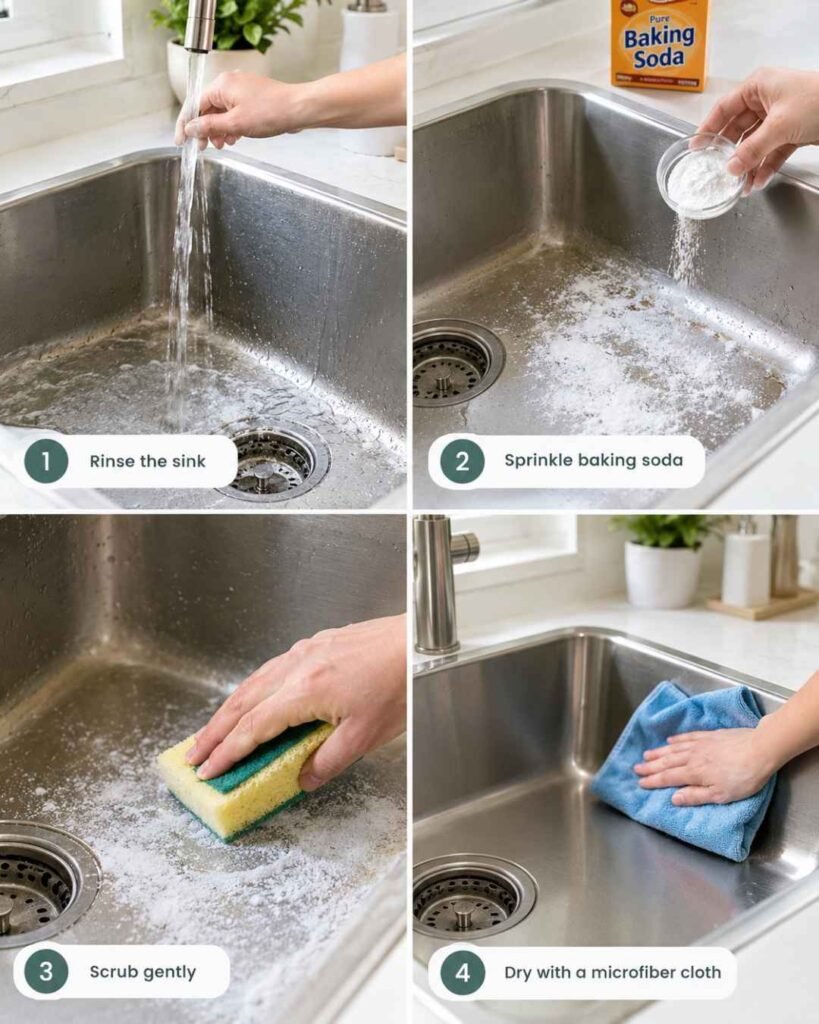
This is the routine I follow almost every evening after dinner, and it takes barely ten minutes.
Step 1: Clear Out Food Scraps
Start by removing any visible food particles, vegetable peels, or grains stuck near the drain. A quick wipe with a paper towel or your hand (with gloves on) works fine.
Step 2: Rinse the Sink With Water
Run warm water across the entire basin. This loosens grease and softens any dried residue from earlier in the day.
Step 3: Apply Dish Soap
Add a small amount of dish soap directly onto a damp sponge. Spread it across the surface, paying attention to corners and the area around the faucet base.
Step 4: Use Baking Soda for Stuck-On Grime
If there are stubborn marks from dal, turmeric, or oil, sprinkle baking soda over the spot. Let it sit for a couple of minutes before scrubbing.
Step 5: Scrub Gently
Use a soft sponge or brush in circular motions. Avoid pressing too hard, especially on stainless steel, since scratches trap dirt faster.
Step 6: Rinse Thoroughly
Rinse away all the soap and baking soda residue with clean water until the surface feels smooth, not slippery.
Step 7: Wipe the Sink Completely Dry
This last step gets skipped by most people, yet it matters the most in areas with hard water. Wiping the sink dry with a microfiber cloth prevents white mineral marks from forming overnight.
How to Clean a Stainless Steel Kitchen Sink
Most modern Indian kitchens, including mine, use a stainless steel sink, so this section deserves special attention.
- Always clean in the direction of the metal grain, not in random circles
- Use mild dish soap with a soft sponge for everyday cleaning
- For stubborn spots, make a light baking soda paste and rub gently
- Rinse well and dry the surface immediately after washing
- Avoid steel wool completely, since it scratches the finish
- Skip aggressive abrasive powders that dull the shine over time
Manufacturer guidance on stainless steel sinks consistently repeats the same point: mild cleaning agents and soft tools keep the surface looking new for years, while scouring pads shorten its life.
How to Remove Hard Water Stains From a Kitchen Sink
This is one of the most common complaints in Indian households, especially in cities where the water is heavy with minerals.
Hard water leaves behind a chalky white film once it dries on the sink surface. To deal with it:
- Soak a cloth in white vinegar
- Lay it over the stained area for about ten minutes
- Wipe and scrub gently with a soft sponge
- Rinse the area completely
- Dry the sink right away
Diluted vinegar works well on stubborn mineral deposits, but it should not be left sitting for too long or used with excessive force, since repeated scrubbing on the same spot can dull certain finishes. If marks keep returning quickly, drying the sink after every use makes the biggest long-term difference.
How to Remove Grease and Stubborn Stains From a Kitchen Sink
Vegetarian cooking still involves plenty of oil, ghee, and spice residue, all of which cling to the sink surface over the day.
- Apply a small amount of dish soap directly on the greasy patch
- Make a thick paste using baking soda and a little warm water
- Scrub gently with a soft brush, focusing on one section at a time
- For turmeric or spice stains, let the paste sit for a few minutes before rinsing
- Always finish with a thorough rinse so no soapy residue remains
Patience matters more than pressure here. A gentle paste left to sit for a few minutes lifts grease far better than aggressive scrubbing ever will.
How to Clean a Kitchen Sink Drain
A clean sink means nothing if the drain underneath is holding onto old food particles and grease. Here is how I handle kitchen sink drain cleaning at home.
- Remove any visible debris sitting near the drain opening
- Take out the strainer and wash it separately with soap and warm water
- Pour warm water down the drain to loosen minor buildup
- For deeper cleaning, add half a cup of baking soda followed by a cup of vinegar, let it sit for around fifteen minutes, then flush with hot water
- Repeat this once a week if your kitchen sees heavy daily cooking
This routine helps with mild buildup and everyday maintenance, but it will not fix a seriously blocked pipe. If water keeps backing up despite regular cleaning, it is worth calling a plumber rather than repeating home remedies endlessly.
How to Get Rid of Bad Smell From a Kitchen Sink
A smelly sink is usually a sign that something is decaying just out of sight, often in the drain or around the strainer.
- Check the strainer for trapped food particles and clean it daily
- Flush the drain with warm water after washing greasy vessels
- Run the baking soda and vinegar method mentioned above once a week
- Keep the area around the tap and drain dry when not in use
- Avoid letting wet sponges sit inside the sink overnight
Once I started cleaning the strainer daily instead of once a week, the smell issue almost disappeared on its own.
How Often Should You Clean Your Kitchen Sink?
A simple schedule keeps this from turning into a chore that piles up.
Daily: A quick rinse and wipe after the last meal of the day.
Two to three times a week: Full soap cleaning along with a check on the strainer and drain opening.
Weekly: A proper deep clean covering stains, hard water marks, and the drain, using the steps shared above.
Sticking to this rhythm means you rarely deal with a sink that looks neglected.
Kitchen Sink Cleaning Mistakes to Avoid
A few habits quietly damage the sink or make cleaning harder over time.
- Using steel wool on stainless steel surfaces
- Scrubbing with harsh abrasive powders
- Leaving a wet sponge sitting in the sink
- Letting cleaning solution dry on the surface instead of rinsing it off
- Pouring oil or grease directly down the drain
- Mixing different cleaning chemicals together
- Combining bleach with vinegar, which can release harmful fumes
That last point deserves a proper warning. Never mix bleach with vinegar or any other cleaning product, since the combination can produce dangerous gases in an enclosed kitchen space.
How to Clean Different Types of Kitchen Sinks
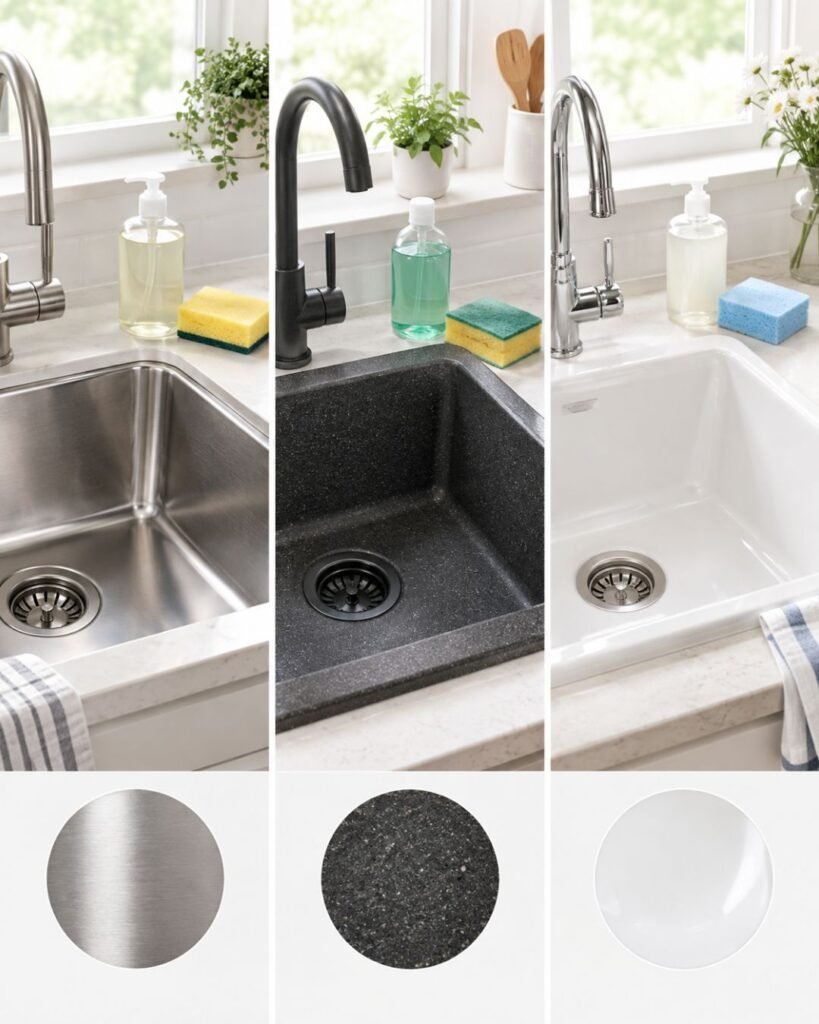
Not every sink is stainless steel, so here is a quick breakdown by material.
- Stainless steel: Mild soap, soft sponge, dry immediately after use
- Granite or quartz composite: Use a pH-neutral cleaner rather than acidic solutions
- Ceramic: Stick to non-abrasive cleaners to protect the glossy coating
- Black stone finish: Follow the specific manufacturer instructions, since coatings vary
- Copper: Needs specialised, product-specific care rather than everyday soap
Knowing your sink material before choosing a cleaning method saves you from accidentally damaging the finish.
Easy Tips to Keep Your Kitchen Sink Clean for Longer
- Use a sink strainer to catch food particles before they enter the drain
- Avoid leaving dirty dishes sitting overnight
- Remove food residue immediately after cooking rather than later
- Rinse the sink right after washing oily vessels
- Dry the surface instead of letting water sit and evaporate on its own
- Wipe around the base of the faucet regularly, since grime collects there quietly
Two Quick Tips That Actually Work
Tip 1: After every wash, take ten seconds to wipe the sink dry with a cloth. This one habit reduces hard water spots more than any product I have tried.
Tip 2: Keep oil, ghee, and food scraps out of the drain entirely. A simple sink strainer catches most of it before it becomes a bigger drain problem later.
Frequently Asked Questions
1. What is the best way to clean a kitchen sink? Remove food debris, wash with mild dish soap and a soft sponge, rinse thoroughly, and dry the surface. Baking soda works well for stubborn spots.
2. How do I clean a stainless steel kitchen sink? Use mild soap with a soft sponge, scrub gently in the direction of the grain, and dry the sink right after rinsing to avoid water marks.
3. How do I remove hard water stains from a kitchen sink? Soak a cloth in white vinegar, place it over the stained area for a few minutes, then scrub gently, rinse, and dry.
4. How do I clean a smelly kitchen sink drain? Clean the strainer daily, flush the drain with warm water, and use baking soda followed by vinegar once a week for deeper cleaning.
5. How often should I clean my kitchen sink? A quick daily wipe plus one proper deep clean each week keeps most kitchen sinks looking fresh without much effort.
Final Thoughts
Learning how to clean kitchen sink properly changed a small daily chore into something I barely think about anymore. It is not about expensive products or complicated routines, just a few consistent habits repeated often enough that they become second nature. Pair a clean sink with a clean kitchen counter, and cooking suddenly feels a lot more enjoyable. If you are also working on building better food habits at home, this 7-day healthy eating plan pairs nicely with a cleaner, more organised kitchen routine.
For more everyday home and wellness guides, visit MindfulHive.