


I still remember the exact evening I decided to try manifestation. I was 22, sitting on my bed with a half-finished cup of chai, scrolling through everyone else's "wins" online while feeling completely stuck in my own life. A friend told me to just "manifest it," and honestly, I rolled my eyes. It sounded like wishful thinking dressed up in nicer words. But I was curious enough to actually learn how to manifest something properly, not just repeat a phrase I saw on Instagram. What I found was less magic and more method: a mix of mindset, small daily habits, and real action. This guide is everything I wish someone had explained to me clearly on that first night, without the vague spiritual language that makes it hard to actually start.
What Is Manifestation?
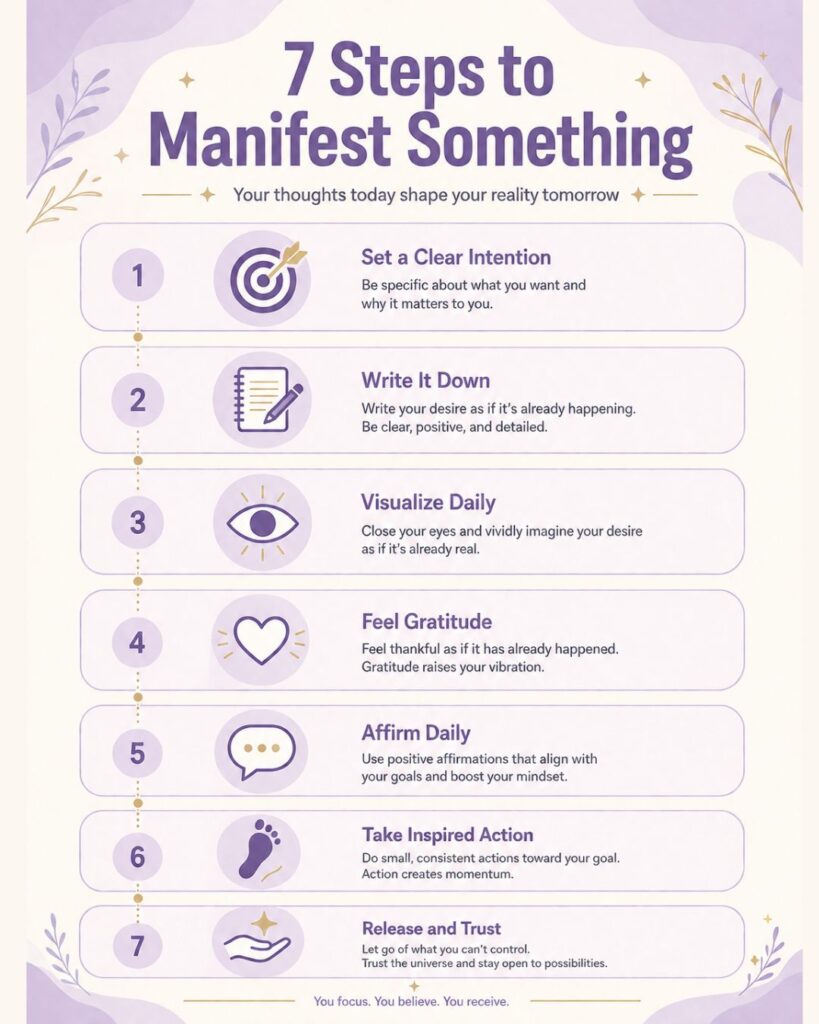
At its core, manifestation is the practice of turning your goals into reality by combining clear intention, a positive mindset, visualization, gratitude, and consistent action. It is not about sitting back and waiting for the universe to drop things in your lap. It is closer to a structured mental habit that keeps your goals sharp in your mind so you notice opportunities and take action toward them.
Think of it like setting a destination on a map app. You still have to drive the car. Manifestation just makes sure you have typed in the right address, checked the route, and stayed alert instead of driving on autopilot. The manifestation method works best when your subconscious mind is aligned with what you actually want, so your daily decisions naturally start moving in that direction.
People manifest all kinds of things: a new job, better health, stronger relationships, financial stability, or simply more peace of mind. The keyword phrase itself, how to manifest something, usually comes up when someone feels stuck and wants a concrete starting point rather than another vague self-help quote.
How Manifestation Works
Manifestation works through a loop between your thoughts, emotions, and behavior. When you repeatedly focus on a goal with genuine belief, your brain starts prioritizing information related to that goal. This is sometimes called selective attention. You are not creating new opportunities out of thin air; you are becoming more likely to notice and act on the ones already around you.
The Mind-Action Connection
Here is the part most articles skip: manifestation only works when it is paired with action. A positive mindset can make you more confident and resilient, but confidence alone does not pay bills or pass exams. What actually changes outcomes is this cycle:
- You set a clear goal
- You visualize and believe in it
- Your mind starts noticing relevant opportunities
- You take small consistent steps
- Momentum builds and results follow
Skip the last two steps, and manifestation becomes just wishful thinking. Include them, and it becomes a genuinely useful self improvement tool.
The Science Behind Manifestation
I was skeptical until I looked into the psychology behind it, and honestly, that is what convinced me to stick with it.
What Psychology Says
Visualization activates similar neural pathways in your brain as actually performing an action. Athletes have used this for decades, mentally rehearsing a race or a shot before physically attempting it. This is often referred to in sports psychology as motor imagery, and it has measurable effects on performance and confidence.
Positive affirmations work through a similar mechanism. Repeating a statement about your goals or abilities can reduce anxiety and improve self-perception, especially when the affirmation feels believable rather than exaggerated. Saying "I am building the skills I need" tends to work better than "I am already a millionaire" if that feels far from your current reality.
Is Manifestation Scientifically Proven?
Manifestation itself, as a concept of attracting outcomes purely through thought, is not something science has proven. However, its individual components, goal-setting, visualization, gratitude, and positive thinking, are backed by research in psychology. A gratitude practice has been linked to better mood and lower stress. Clear goal-setting improves the odds of following through on plans. So while manifestation as a whole is more of a personal practice than a scientific law, the habits inside it have real, studied benefits.
This is why I stopped thinking of manifestation as something mystical and started treating it as a mental training routine, closer to how someone trains for a marathon than how someone makes a wish. The training builds belief, and belief keeps you consistent long enough for real action to produce results. That combination, not the thought alone, is what actually moves the needle on any goal worth chasing.
Step-by-Step Guide to Manifest Something You Want
This is the part I wish someone had handed me directly instead of making me piece it together from ten different videos.
Step 1: Get Clear on Your Goal
Vague goals produce vague results. Instead of "I want a better job," try "I want a marketing role with a 20 percent salary increase within six months." Specificity gives your brain something concrete to work toward.
Step 2: Write It in Present Tense
Write your goal as if it is already happening: "I am working in a role that excites me and pays me fairly." This small shift trains your mind to associate the goal with your current identity rather than a distant future.
Step 3: Visualize Daily
Spend five to ten minutes each day picturing yourself living the outcome. Notice small details: what you are wearing, how your workspace looks, how you feel. This visualization technique strengthens the emotional connection to your goal.
Step 4: Practice Gratitude
Before asking for more, acknowledge what you already have. A simple gratitude journal entry each morning, even three lines, shifts your focus from lack to abundance, which keeps motivation steady instead of anxious.
Step 5: Use Positive Affirmations
Choose one or two affirmations that feel true and repeat them daily, ideally out loud. Consistency matters more than intensity here.
Step 6: Take Consistent Action
This is the step people skip most. If your goal is a new job, that means updating your resume, applying weekly, and building relevant skills, not just visualizing an offer letter appearing.
Step 7: Release and Trust the Process
Once you have done the visualization and the action, let go of the outcome instead of obsessively checking for results. Constant anxious checking often creates the exact stress that blocks clear decision-making.
A Quick Visualization Exercise You Can Try Tonight
Sit somewhere quiet for five minutes. Close your eyes. Picture one specific moment from your goal already achieved, like opening an acceptance email or stepping into a new home. Notice how your body feels in that moment. Open your eyes and write down one action you can take tomorrow that moves you closer to it.
Best Manifestation Techniques for Beginners
If you are new to this, you do not need every technique at once. Start with one or two and build from there.
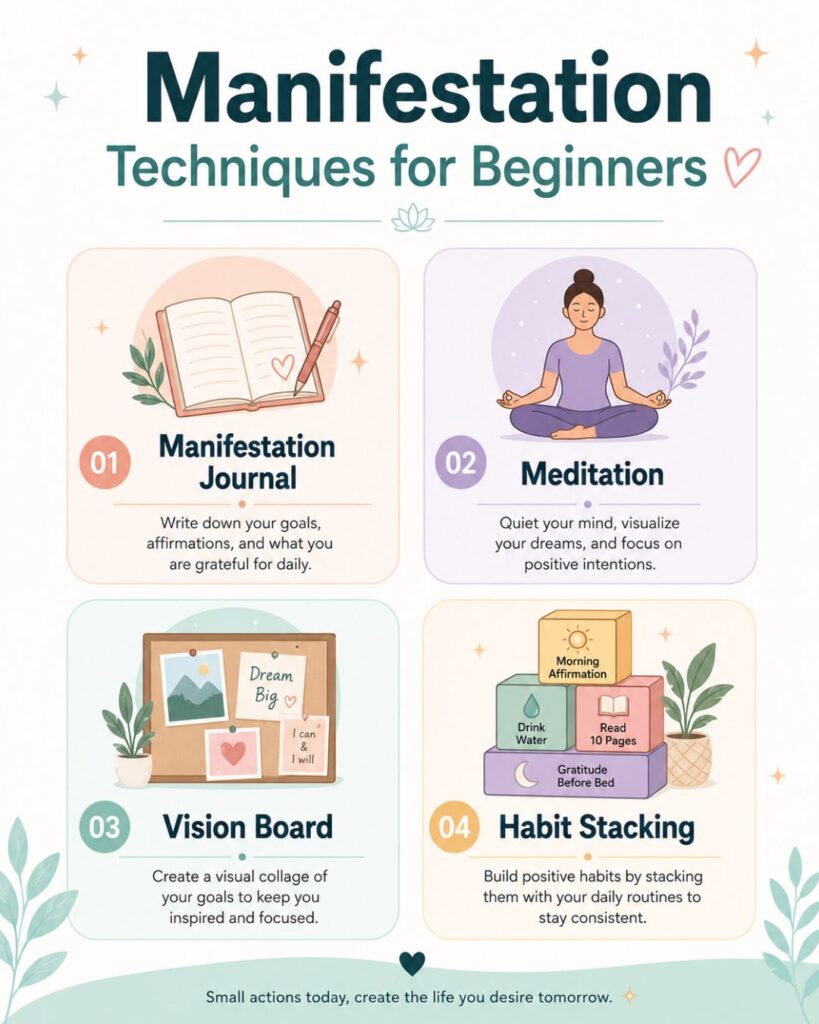
Manifestation Journal
A dedicated notebook where you write your goals, track daily affirmations, and note small wins keeps your intentions visible instead of buried in your thoughts. Many beginners find that a simple manifestation journal habit, even five minutes a day, creates more clarity than hours of overthinking.
Meditation for Manifestation
Meditation calms mental noise so your goals are not competing with anxiety or distraction. Even five minutes of focused breathing before your visualization practice makes the exercise more effective.
Vision Boards
A vision board is a physical or digital collage of images representing your goals. Placing it somewhere visible, like near your desk or as your phone wallpaper, keeps your manifestation routine active without extra daily effort.
Bonus: Habit Stacking
Attach your manifestation practice to something you already do daily, like your morning coffee or your commute. This makes consistency far easier to maintain than relying on willpower alone.
Common Mistakes People Make When Manifesting
Most beginners run into the same few problems. Here are the ones I made too.
- Treating manifestation as a replacement for effort instead of a support system for it
- Focusing on the absence of something ("I don't have money") instead of the presence of the goal
- Giving up after a few days because results are not instant
- Holding onto limiting beliefs like "this only works for other people"
- Choosing goals that are not clearly defined, which makes progress hard to measure
Awareness of these patterns alone tends to improve results significantly, simply because you stop working against yourself.
My Daily Manifestation Routine
I keep mine simple because complicated routines rarely last.
Morning Routine
I write three things I am grateful for, read my goal statement out loud once, and spend two minutes visualizing it before I even check my phone. This small daily routine sets the tone before the day's noise takes over.
Night Routine
Before bed, I write one action I took that day, even a small one, toward my goal. This reinforces the connection between belief and effort, which I found matters far more than the visualization itself.
If you are also trying to build steady personal habits outside of manifestation, improve your daily routine with better sleep, since low energy makes consistency much harder to maintain. On the days I skip proper sleep, my affirmations feel hollow and my motivation drops noticeably, which taught me that manifestation is only as strong as the physical habits supporting it.
Final Thoughts on How to Manifest Something
Manifestation is not a shortcut, and it is not magic. It is a structured way of aligning your thoughts, emotions, and daily actions toward a goal you genuinely believe you can reach. The people who see results are rarely the ones who visualize the most; they are the ones who pair belief with steady, realistic action over time. If you are just starting out, pick one technique from this guide, stay consistent for a few weeks, and adjust as you learn what actually works for you.
For more grounded, practical self-improvement guidance like this, you can explore other resources on MindfullHive, including the 7 Habits of Highly Effective People, which pairs well with manifestation as a framework for building consistency.
Two Quick Tips to Manifest Faster
Tip 1: Write your goal in the present tense and review it every morning to stay focused. This keeps your intention active instead of something you only think about occasionally.
Tip 2: Pair visualization with one concrete action every day. Consistent effort, even small, is what actually turns intention into progress. If your goal involves better healthy lifestyle choices or healthy daily habits, pairing your manifestation practice with real nutrition changes, like the benefits found in healthy nutrition choices, makes physical goals far more achievable. Small wellness additions, such as natural wellness routines, can also support the self-care side of manifestation.
Frequently Asked Questions
1. Can anyone manifest something?
Yes. Manifestation works best when you combine a positive mindset with consistent action toward realistic goals, rather than relying on belief alone.
2. How long does manifestation take?
There is no fixed timeline. Results depend on your specific goal, your habits, your effort, and circumstances outside your control.
3. Is manifestation scientifically proven?
Visualization, goal setting, and positive thinking have documented psychological benefits, but manifestation as a complete concept is not a scientifically proven law of outcomes.
4. What is the best manifestation technique for beginners?
Visualization, affirmations, gratitude journaling, and taking daily action are widely considered the most effective starting techniques.
5. Can manifestation improve confidence?
Yes. Practicing affirmations, gratitude, and clear goal setting can strengthen self-belief and motivation over time, especially when paired with visible progress.