
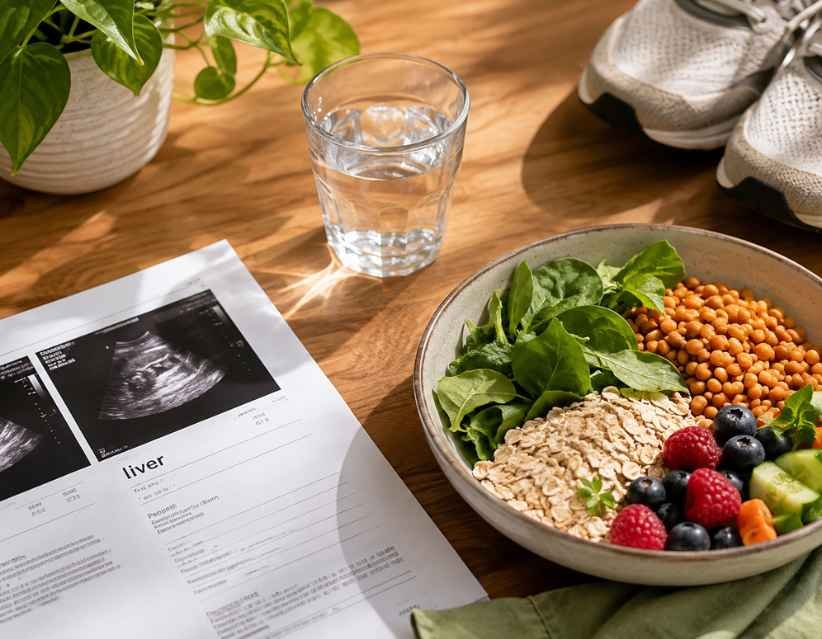
Last month I opened my ultrasound report and saw three words I had never noticed before: grade 1 fatty liver. My first thought was simple panic. My second thought, once I calmed down, was a question that probably brought you here too: is grade 1 fatty liver dangerous? I spent the next few days reading everything I could find, talking to a doctor friend, and slowly understanding what this actually means. This blog is everything I learned, written the way I wish someone had explained it to me.
I am a 22 year old, and I run on a completely vegetarian diet, no eggs included. So every diet suggestion in this article is something I have actually tried in my own kitchen, not copied from a textbook.
What Is Grade 1 Fatty Liver?
The liver naturally holds a small amount of fat. When that fat builds up beyond a healthy level, doctors call it fatty liver disease. It gets graded on an ultrasound based on how much extra fat is visible.
Grade 1 fatty liver is the mildest stage. On a scan, the liver looks slightly brighter than normal because of the extra fat, but the organ's shape and borders are still clear. This condition used to be called NAFLD (non-alcoholic fatty liver disease), and doctors now increasingly use the term MASLD (metabolic dysfunction-associated steatotic liver disease). You will see both terms used online, so it helps to know they refer to largely the same thing.
Why Ultrasound Grading Isn't the Full Picture
An ultrasound tells you how much fat sits in the liver. It does not fully tell you about scarring, or fibrosis, which is a separate and more important marker of long-term liver risk. This is a detail many articles skip, and it matters a lot when you're trying to judge how worried to be.
Is Grade 1 Fatty Liver Dangerous?
Here is the direct answer many of us are searching for:
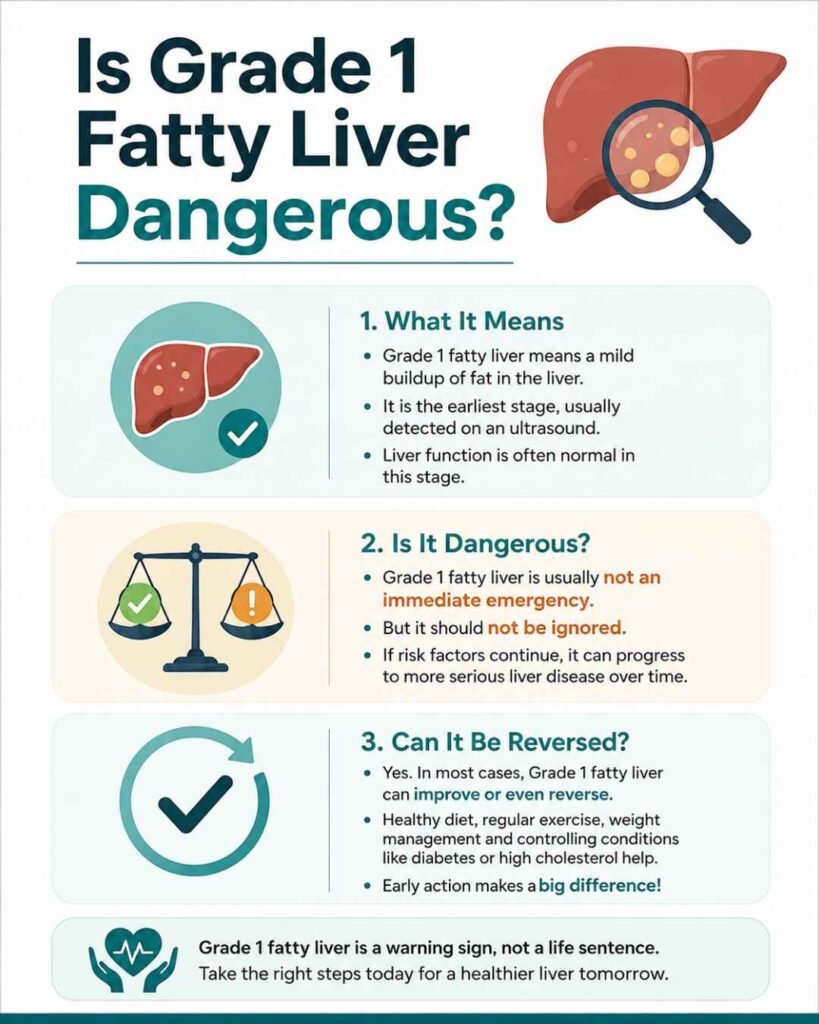
Grade 1 fatty liver is usually not immediately dangerous. It is the earliest and mildest stage of fatty liver disease, and it often causes no pain, no symptoms, and no lasting damage on its own. However, that does not mean it should be ignored.
A few points worth remembering:
- Grade 1 is generally reversible with lifestyle changes
- It is rarely an emergency on its own
- It can point toward hidden issues like insulin resistance or high cholesterol
- Left unmanaged for years, it can slowly progress toward higher grades
- The real risk comes from what caused it, not the grade number itself
So the honest answer sits between "harmless" and "serious." Grade 1 fatty liver is a warning sign your body is giving you early, while there is still plenty of time to fix things.
Grade 1 vs Grade 2 vs Grade 3 Fatty Liver
Understanding where grade 1 sits compared to the other stages makes the picture much clearer.
- Grade 1 – mild fat buildup, liver borders remain sharp, usually no symptoms
- Grade 2 – moderate fat, liver appears noticeably brighter, some patients feel fatigue or mild discomfort
- Grade 3 – severe fat accumulation, liver structure becomes harder to see clearly, higher risk of inflammation and fibrosis
Progression from one grade to the next is not automatic. Many people stay at grade 1 for years, and many actually reverse it completely once they act on it.
What Causes Grade 1 Fatty Liver?
Fatty liver rarely has one single cause. It usually builds up from a mix of daily habits and underlying metabolic factors.
Common causes include:
- Being overweight, especially around the abdomen
- Insulin resistance or early type 2 diabetes
- High triglycerides or unbalanced cholesterol
- A diet high in refined carbohydrates and added sugar
- A sedentary lifestyle with little physical movement
- Alcohol use, though many cases occur in people who don't drink at all
- Genetics and family history of metabolic issues
In India specifically, fatty liver has become extremely common. A pooled analysis of Indian studies estimated NAFLD prevalence at around 38.6 percent among adults, largely linked to rising obesity, diabetes, and highly processed diets. That number surprised me when I first read it, because I always assumed this was something that only happened to older people.
Why It's So Common in Young Adults Now
Our generation eats more packaged snacks, sits for longer hours at desks and screens, and consumes more sugary drinks than earlier generations. Add irregular sleep and stress, and the liver quietly absorbs the impact long before we feel anything.
What Are the Symptoms of Grade 1 Fatty Liver?
Most people with grade 1 fatty liver feel completely fine. That's exactly why it's usually caught by accident, during a routine ultrasound or a general health check-up, the same way mine was found.
When symptoms do appear, they are usually mild and non-specific:
- Mild fatigue or low energy
- A dull, heavy feeling in the upper right side of the abdomen
- Occasional bloating
- Slight discomfort after heavy meals
Because these signs are so easy to brush off, the ultrasound report is often the first real clue.
How Is Grade 1 Fatty Liver Diagnosed?
Diagnosis typically involves more than just the scan itself.
- Ultrasound – confirms fat accumulation and assigns the grade
- Liver function tests – checking liver enzymes such as ALT and AST
- Blood sugar and lipid profile – to catch insulin resistance, diabetes, or high cholesterol
- FIB-4 score or FibroScan – used when a doctor wants to check for fibrosis risk beyond simple fat grading
I only knew about the ultrasound before this. Learning that fibrosis assessment is a separate step made me understand why my doctor asked for extra blood work instead of just repeating the scan.
Can Grade 1 Fatty Liver Be Reversed?
Yes, and this is genuinely the most encouraging part of the whole topic. Grade 1 fatty liver can often be reversed with consistent lifestyle changes, since the fat buildup at this stage is not yet permanent damage.
What helps most:
- Gradual, steady weight loss if you're overweight
- Cutting back on sugar and refined carbs
- Regular physical activity, even simple walking
- Managing diabetes or cholesterol if present
- Getting proper sleep instead of running on four or five hours
None of this needs to happen overnight. Most doctors recommend slow, sustainable change rather than a crash diet, since rapid weight loss can sometimes stress the liver further.
What Should You Eat With Grade 1 Fatty Liver? (Vegetarian Diet Tips)
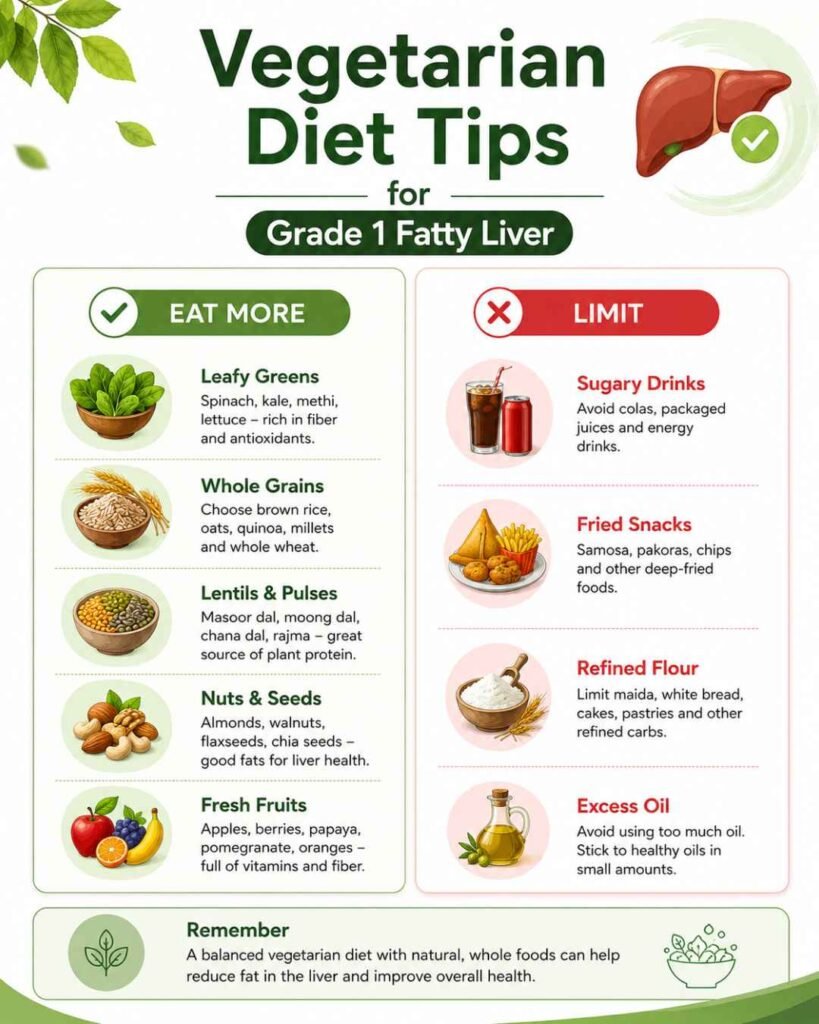
Since my family and I are fully vegetarian, I focused on plant-based options that actually fit an Indian kitchen. Here's what has worked for me and what most dietary guidance for fatty liver supports:
Foods to include more often:
- Leafy greens like spinach and methi
- Whole grains such as oats, brown rice, and millets
- Legumes and lentils for protein
- Nuts and seeds in moderate portions
- Fruits like berries and citrus, eaten whole rather than juiced
- Plenty of water through the day
You can read more ideas in this 7-day healthy eating plan, which is where I picked up a few of my current breakfast habits. If you enjoy fruit-based snacking, strawberry benefits is worth a look too, since berries are genuinely useful for this kind of diet.
Foods to Limit or Avoid
- Sugary drinks and packaged juices
- Deep-fried snacks
- White bread, maida-based items, and heavily processed food
- Excess ghee or oil in daily cooking
- Alcohol, which should be discussed with your doctor based on your specific case
Exercise and Lifestyle Changes That Help
Movement matters just as much as food when it comes to grade 1 fatty liver. You don't need an intense gym routine to see results.
- Brisk walking for 30 minutes, most days of the week
- Light strength training twice a week
- Reducing long sitting stretches at work
- Prioritising 7 to 8 hours of sleep
If your sleep schedule is as messy as mine used to be, this piece on how to sleep 8hrs in 4hrs is a useful read, though building real, consistent sleep habits remains the better long-term fix. Building small daily discipline around food, movement and sleep is honestly closer to the mindset described in The 7 Habits of Highly Effective People, just applied to health instead of productivity.
If weight is part of your picture, this article on peanut butter and weight loss breaks down how to use it sensibly instead of assuming it's automatically bad.
Grade 1 Fatty Liver and Your Metabolic Health
Once I started reading more, I realised grade 1 fatty liver rarely shows up on its own. It usually travels with a group of related metabolic issues, and understanding that connection changed how seriously I took my report.
The Insulin Resistance Link
Insulin resistance is one of the biggest drivers behind fatty liver. When cells stop responding well to insulin, the body pushes extra fat toward storage in places like the liver. This is also why doctors often check fasting blood sugar and HbA1c alongside a fatty liver diagnosis, even if you don't have diabetes yet.
Cholesterol and Triglycerides
High triglycerides and imbalanced cholesterol frequently appear alongside grade 1 fatty liver. Managing these numbers through diet and activity often improves liver fat at the same time, since the two are closely linked in how the body processes fat.
Metabolic Syndrome
When abdominal weight, high blood pressure, high blood sugar and abnormal cholesterol occur together, doctors call it metabolic syndrome. Grade 1 fatty liver is frequently one of the earliest visible signs of this cluster, which is exactly why it deserves attention even though it sounds mild on paper.
When Should You See a Doctor?
Grade 1 fatty liver on its own rarely needs emergency care, but you should see a doctor if:
- You experience ongoing pain in the upper right abdomen
- You notice unexplained fatigue that doesn't improve
- Your blood tests show high liver enzymes
- You have diabetes, high cholesterol, or a family history of liver disease
- A repeat ultrasound shows the grade has increased
Getting a proper check-up, rather than guessing based on symptoms alone, is the safest approach.
Frequently Asked Questions
Is grade 1 fatty liver dangerous?
Usually, grade 1 fatty liver is not immediately dangerous. It is the mildest form of liver steatosis, though it should still be taken seriously because underlying metabolic issues can raise the risk of progression over time.
Can grade 1 fatty liver be reversed?
Yes. Many people improve their liver fat levels through regular exercise, dietary changes, gradual weight management and treatment of related conditions such as diabetes or high cholesterol.
Does grade 1 fatty liver cause symptoms?
Often it doesn't. Most people discover it during a routine ultrasound or a general health check-up, exactly the way I found mine.
What foods should I avoid with fatty liver?
Limit sugary drinks, deep-fried snacks, refined flour products and excess oil. Alcohol should be discussed directly with your doctor based on your individual case.
Do I need medicine for grade 1 fatty liver?
Not always. Treatment depends on the underlying cause and any related conditions, so a proper medical assessment is the best way to know what you actually need.
Two Quick Tips
Tip 1: Don't judge your liver health by the ultrasound grade alone. Ask your doctor about liver enzymes and fibrosis risk too.
Tip 2: Small, steady changes in food and movement work better than dramatic short-term diets when it comes to reversing fatty liver.
Final Thoughts
Finding out I had grade 1 fatty liver at 22 was unsettling at first, but it turned into one of the more useful wake-up calls I've had. The honest answer to is grade 1 fatty liver dangerous is that it's mild, manageable, and often reversible, but it's also your body's way of asking you to pay attention before things progress. If you've just seen this on your own report, take it as a nudge, not a crisis.
For more health and wellness reads, visit MindfulHive, where I share more of what I'm learning along the way.