
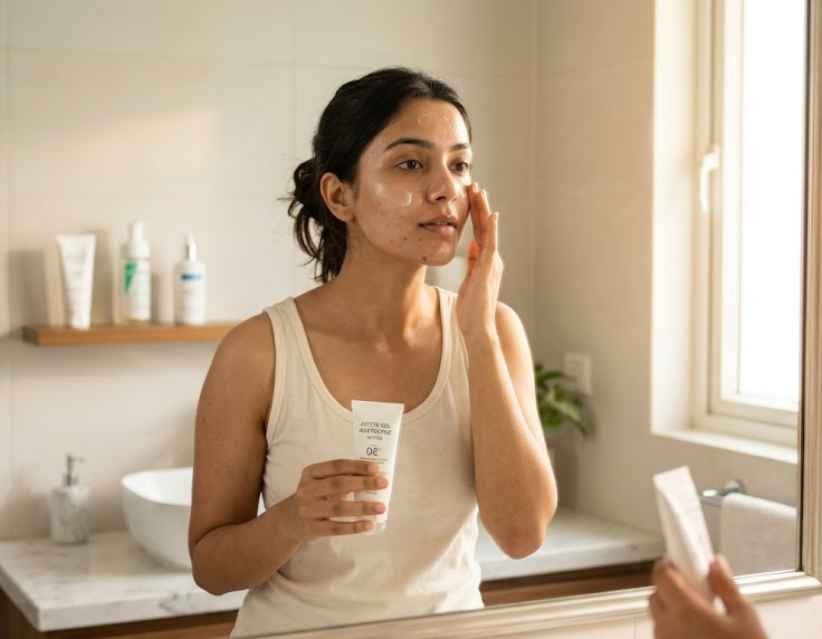
Last monsoon, I stood in front of my bathroom mirror at 8 AM, watching my face turn shiny within twenty minutes of applying sunscreen. I was already running late for work, my skin felt like it was frying under a thick layer of cream, and I remember thinking, there has to be a better way to do this. That morning sent me down a rabbit hole of reading labels, testing formulas, and asking every dermatologist-approved page I could find one simple question: what is the right sunscreen for oily skin, especially when you live somewhere as hot and humid as India?
If you are here, you probably know that feeling too well. You want sun protection, but you don't want to look like you dipped your face in oil by noon. The good news is that choosing the right sunscreen for oily skin is not complicated once you understand what to actually look for. This guide walks you through everything, from SPF and PA ratings to textures, ingredients, and the small mistakes most of us make without realising it.
What Makes a Good Sunscreen for Oily Skin?
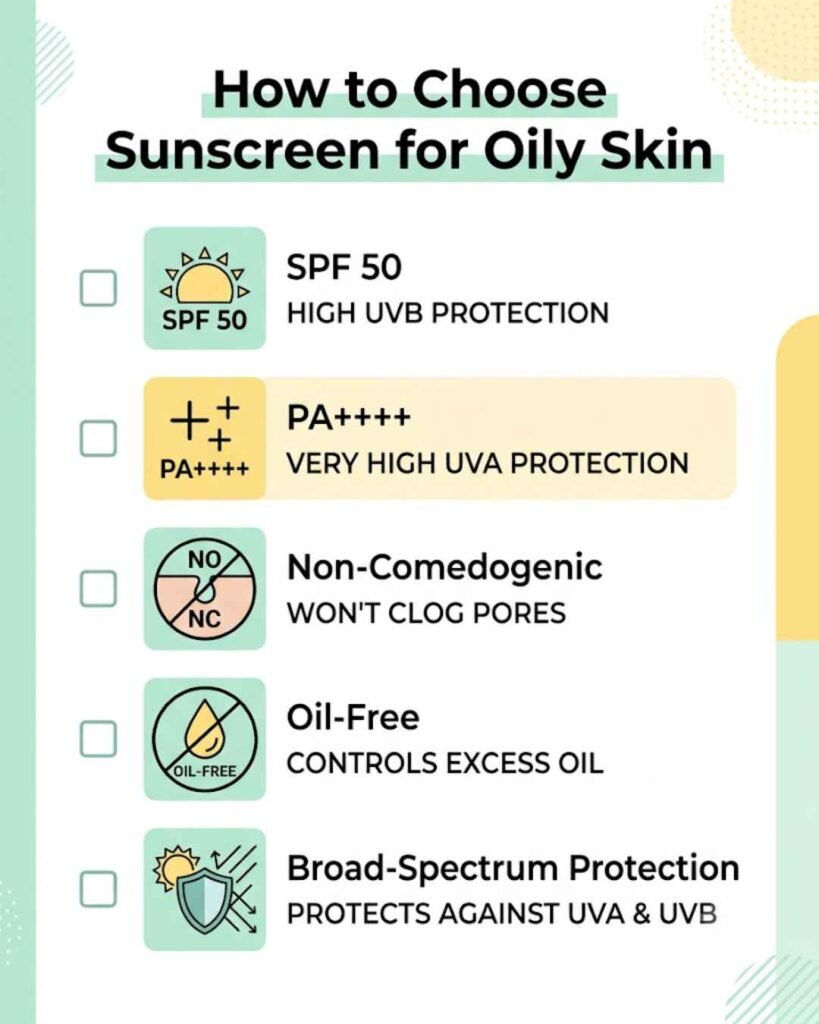
Not every sunscreen behaves the same way once it sits on oily skin for a few hours. Some formulas mix with your natural sebum and turn into a greasy mess by afternoon. Others sit lightly and hold their shape. Here is what separates a sunscreen that works from one that just sits in your drawer unused.
Lightweight, Non-Greasy Texture
A good sunscreen for oily skin should feel almost weightless once it settles in. Thick, cream-based sunscreens can feel comfortable on dry skin, but on oily skin they often add to the shine you are already trying to control. Look for words like fluid, gel, or lotion on the label instead of rich cream.
Non-Comedogenic and Oil-Free Formulas
Non-comedogenic simply means the product is made in a way that it should not clog your pores. Since oily skin is more prone to blocked pores and breakouts, this single word on the packaging matters a lot. Pair it with an oil-free base, and you have a formula that is far less likely to trigger new breakouts.
Broad-Spectrum SPF Protection
Whatever texture you choose, make sure it offers broad-spectrum protection. This means the sunscreen shields your skin from both UVA and UVB rays, not just one type. Oily skin still needs this protection every single day, sunny or cloudy.
How to Choose the Right Sunscreen for Oily Skin in India
India's weather is not gentle. Between the heat, the humidity, and the pollution in most cities, choosing a sunscreen for oily skin here needs a slightly different checklist than what you would use in a cooler, drier climate.
Check the SPF and PA Rating
SPF 50 is a reliable starting point for most Indian cities, especially if you spend time commuting, walking, or sitting near a window during the day. Along with SPF, check the PA rating. PA++++ offers the strongest UVA protection currently available, which matters for preventing tanning, pigmentation, and early signs of ageing.
Pick the Right Texture
This is where most people go wrong. They pick a sunscreen because a friend recommended it, without checking if the texture actually suits their skin. A gel sunscreen for oily skin usually works best in humid weather because it dries down fast and does not leave a sticky film. A matte sunscreen for oily skin is a good pick if shine control is your biggest concern through the day.
Look for Skin-Friendly Ingredients
Certain ingredients consistently work well for oily and acne-prone skin. We will cover these in detail further down, but keep an eye out for niacinamide, zinc oxide, and silica based mattifying agents when you are comparing products.
Consider India's Heat and Humidity
If you sweat easily or spend a lot of time outdoors, a water-resistant or sweat-resistant sunscreen will hold up far better than a regular one. This one factor alone can decide whether your sunscreen survives a full day or slides off by lunchtime.
Gel vs Matte vs Cream Sunscreen for Oily Skin
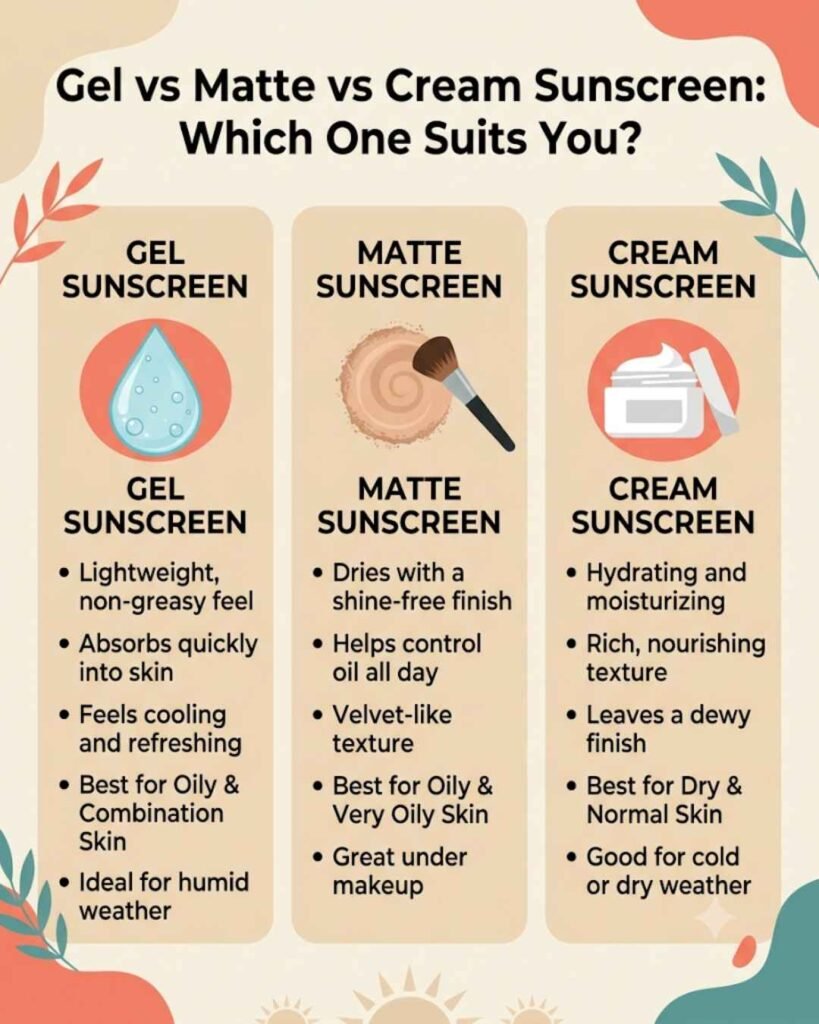
Since texture makes such a big difference, here is a simple breakdown to help you decide what suits your routine.
- Gel sunscreen: Best for very oily skin and humid weather. Feels light, absorbs quickly, and rarely leaves a sticky residue.
- Fluid or lotion sunscreen: Works well for daily office wear when you want something thin that layers easily under makeup.
- Matte finish sunscreen: Ideal if excess shine bothers you by midday. Often contains mattifying powders that absorb surface oil.
- Cream-based sunscreen: Better suited for oily skin that is also dehydrated, since it adds a touch of extra moisture along with sun protection.
There is no single "best" texture for everyone. Your ideal sunscreen for oily skin depends on how your skin behaves through the day, not just what worked for someone else.
Best Sunscreen for Oily and Acne-Prone Skin
If your skin is both oily and prone to breakouts, a couple of extra checks can save you a lot of frustration. Always confirm the sunscreen is non-comedogenic and preferably fragrance-free, since added fragrance can sometimes irritate sensitive, acne-prone skin. Avoid heavy, occlusive formulas that trap oil and sweat underneath, since this combination often leads to more breakouts, not fewer.
It also helps to remember that no sunscreen can promise to prevent acne on its own. What it can do is avoid making existing breakouts worse while still protecting your skin from sun damage. If your acne is persistent or painful, it is worth speaking to a dermatologist rather than relying only on product labels.
Key Ingredients to Look For in a Sunscreen for Oily Skin
Understanding a few ingredient names makes label reading so much easier.
- Niacinamide: Helps regulate oil production and calm redness over time.
- Silica: A common mattifying ingredient that absorbs surface shine.
- Zinc oxide: A mineral filter that offers broad protection and tends to suit sensitive, breakout-prone skin well.
- Titanium dioxide: Another mineral option often paired with zinc oxide for added coverage.
- Hyaluronic acid: Adds light hydration, which is useful if your oily skin also feels tight or dehydrated after cleansing.
You do not need a sunscreen packed with every single one of these. Even one or two of these ingredients in a well-formulated product can make a noticeable difference.
How to Apply Sunscreen on Oily Skin the Right Way
A common mistake I made for years was assuming that because my skin was oily, I could get away with a thin layer of sunscreen. That logic is backwards. Oily skin still needs a proper amount of product to get real protection.
Here is a simple routine that works well for most oily skin types:
- Cleanse your face first to remove excess oil from the night before.
- Apply a light moisturiser if your skin needs it, then let it settle for a minute.
- Apply your sunscreen generously, covering your face, neck, and ears.
- Give it a couple of minutes to set before stepping outdoors or applying makeup.
- Reapply every few hours if you are outdoors for extended periods, especially after sweating.
Do not use less sunscreen just because your skin feels oily already. Under-applying is one of the biggest reasons sunscreen fails to protect properly.
Common Mistakes People with Oily Skin Make with Sunscreen
A few habits quietly undo the benefits of a good sunscreen for oily skin routine.
- Skipping sunscreen entirely because the skin already feels oily or shiny.
- Applying too little product to save on the "greasy feeling."
- Choosing a sunscreen purely based on the SPF number, ignoring texture and finish.
- Rubbing the product in too aggressively instead of pressing it into the skin.
- Forgetting to cover the neck and ears along with the face.
- Never reapplying, even during long hours outdoors.
- Sticking with a heavy formula you secretly dislike, which leads to skipping it altogether.
Fixing even two or three of these habits can noticeably improve how your skin looks and feels by the end of the day.
Can You Wear Sunscreen for Oily Skin Under Makeup?
Yes, and it works better than most people expect once you get the order right. Choose a lightweight, fast-absorbing sunscreen and let it settle fully before applying foundation or concealer. Avoid layering too many heavy products on top of each other, since this combination is what usually causes makeup to pill or slide off by afternoon. If your foundation seems to separate on top of your sunscreen, try switching to a lighter, more fluid formula instead of a thick cream.
Taking Care of Your Skin Beyond Sunscreen
Sunscreen protects your skin from the outside, but a few daily habits support it from the inside too. A balanced diet with enough fruits and vegetables genuinely shows up on your skin over time. If you are working on eating better, this 7-day healthy eating plan is a simple place to start, and foods like strawberries are a good example of antioxidant-rich additions to your diet.
Sleep matters just as much, since your skin repairs itself overnight. If your schedule is tight, this guide on how to sleep well in less time might help you get better rest. And if you enjoy natural oils as part of your evening routine, you can also read about batana oil benefits for hair and skin nourishment. Building any healthy habit, including a consistent skincare routine, gets easier once you understand why consistency matters, something this piece on effective daily habits explains well.
Quick Tips
Tip 1: Judge your sunscreen by how your skin feels by midday, not just by the word "matte" printed on the bottle.
Tip 2: Always carry your sunscreen with you and reapply during long outdoor hours, especially after sweating heavily.
Frequently Asked Questions
Is SPF 50 good for oily skin?
Yes. SPF 50 works well for oily skin as long as the formula itself is lightweight. Gel, fluid, or matte options are usually more comfortable than heavy cream-based versions.
Which sunscreen is best for oily and acne-prone skin?
Look for a lightweight, non-comedogenic, and ideally oil-free formula. A gel or fluid texture tends to feel more comfortable if you are dealing with both shine and breakouts.
Can sunscreen make oily skin more oily?
A specific product might feel heavy or greasy on your skin, but that does not mean sunscreen itself is the problem. Switching to a lighter texture usually solves this completely.
Should oily skin use sunscreen every day?
Yes, every single day, including cloudy days and days spent mostly indoors near windows. Daily protection is what actually prevents long-term sun damage.
Can I apply sunscreen under makeup?
Yes. Apply a lightweight sunscreen first, let it settle for a couple of minutes, and then move on to your foundation or concealer.
Final Thoughts
Choosing the right sunscreen for oily skin really comes down to three things: a texture you actually enjoy using, an SPF and PA rating that offers real protection, and enough consistency to apply it every single day. Once you find a formula that fits your skin, sunscreen stops feeling like a chore and starts feeling like a simple part of your morning.
For more practical skincare and lifestyle guides, visit Mindful Hive.